

Key Takeaways
- A dog's breed history is the single strongest predictor of its daily exercise requirements.
- Under-exercised dogs commonly develop destructive behaviors, anxiety, and weight-related health problems.
- High-energy working breeds need structured activity, not just a backyard to roam.
- Senior dogs and brachycephalic breeds need modified, gentler exercise routines.
- Consistency in daily activity matters more than occasional intense exercise sessions.
Breed-Based Exercise Needs
Breed-based exercise needs refer to the specific amount and type of physical activity a dog requires based on its genetic heritage and the purpose it was originally bred to perform. Working and sporting breeds typically need far more daily movement than companion or toy breeds. Matching your dog's activity level to its breed profile is a core part of responsible ownership.
Exercise requirements are influenced by factors including muscle fiber composition, cardiac capacity, and neurological drive - all of which selective breeding has shaped over centuries to optimize dogs for specific tasks.
Why Breed History Dictates Energy Level
Dogs were not domesticated as a single, uniform companion animal. Over centuries, humans selectively bred dogs to perform specific jobs - herding livestock, retrieving game, guarding property, pulling sleds, or simply sitting on laps. The result is a species with extraordinarily varied physical and behavioral blueprints, and those blueprints directly determine how much exercise your dog needs every day.
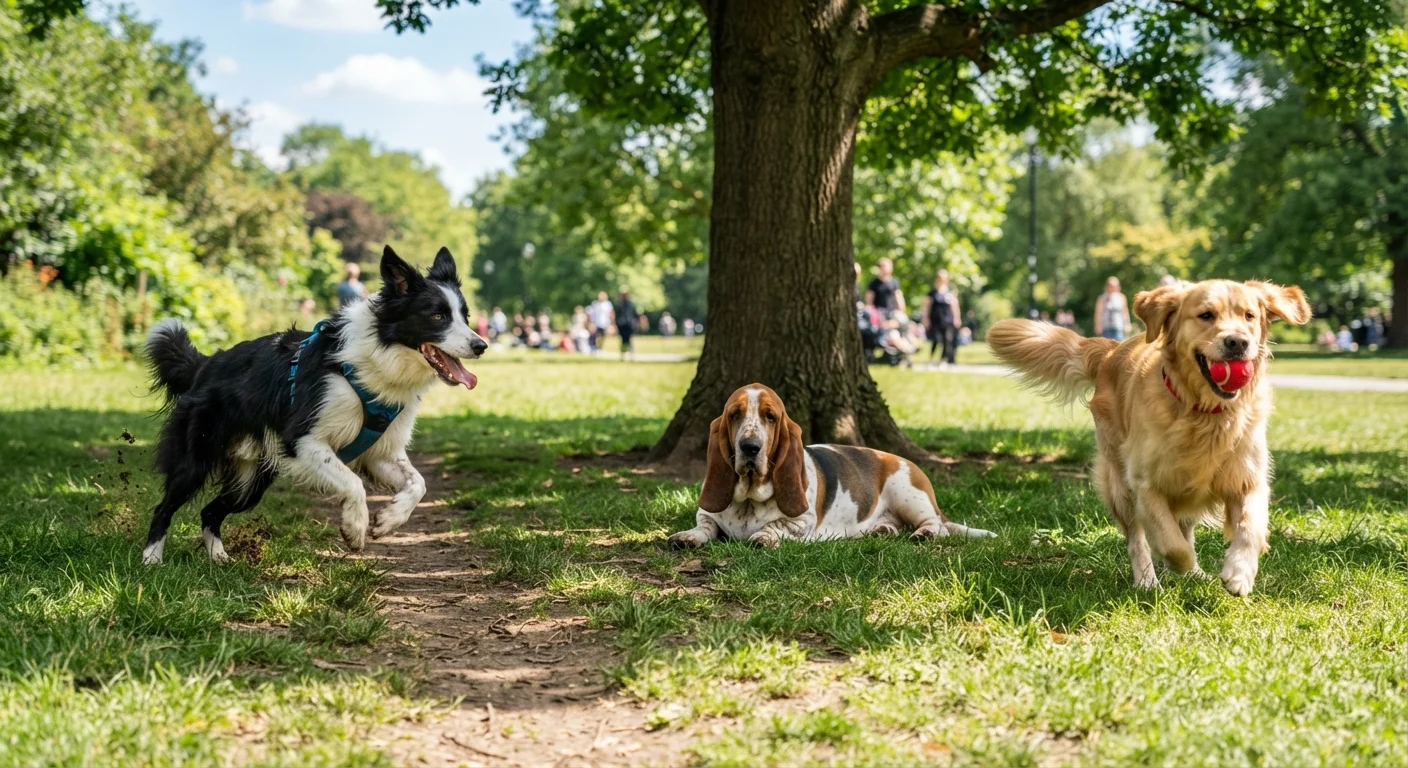
A Border Collie, bred to work sheep across open hillsides for eight or more hours, carries genetics wired for sustained aerobic output and intense focus. A Basset Hound, developed to trail scent at a slow, methodical pace alongside human hunters on foot, has a completely different energy profile. Neither dog is wrong - they're simply built for different demands. Problems arise when owners choose a breed without accounting for these deep-rooted biological drives.
“The behaviors we call 'problem behaviors' in dogs are often just normal behaviors performed in the wrong context - and insufficient exercise is one of the most common reasons a dog ends up in the wrong context all day long.”
— Dr. Karen Overall, Veterinary behaviorist and author of works on applied animal behavior
What Under-Exercise Actually Looks Like
When a dog's exercise needs go unmet, the consequences are predictable and well-documented in veterinary and animal behavior literature. Physically, insufficient activity contributes to weight gain, which in turn stresses joints, strains the cardiovascular system, and increases the risk of conditions like diabetes. Behaviorally, under-exercised dogs - especially working and sporting breeds - often become destructive, anxious, or difficult to train.
Common signs that a dog needs more activity include: excessive chewing or digging, persistent barking, restlessness, attention-seeking behaviors, and difficulty settling indoors. These behaviors are not personality flaws; they're a dog communicating unmet physical needs. Unusual behaviors like grass-eating can sometimes reflect boredom or stress as well, reinforcing why a well-exercised dog is typically a calmer, healthier one.
40%+
of US dogs estimated to be overweight or obese
The Association for Pet Obesity Prevention has consistently found that a large proportion of American dogs carry excess weight, with insufficient exercise cited as a primary contributing factor alongside diet.
2+ hours
Daily activity needed by high-drive working breeds
Veterinary behaviorists and breed organizations such as the American Kennel Club note that herding and working breeds typically require substantial structured daily exercise well beyond a standard walk.
Broad Categories: Low, Moderate, and High Exercise Needs
While every dog is an individual, breed groups offer a useful starting framework:
- High-energy breeds - Herding breeds (Border Collie, Australian Shepherd), sporting breeds (Labrador Retriever, Vizsla), and working breeds (Siberian Husky, Belgian Malinois) typically need 90 minutes to two-plus hours of vigorous daily activity. Without it, they struggle.
- Moderate-energy breeds - Many companion breeds and some hounds (Beagle, Cocker Spaniel, Standard Poodle) are well-served by 45 to 60 minutes of varied daily exercise including walks, play, and mental stimulation.
- Lower-energy breeds - Brachycephalic breeds like Bulldogs and Pugs, as well as many toy breeds, generally need shorter, gentler sessions - often 20 to 30 minutes - but their breathing limitations mean heat and overexertion are genuine safety concerns.
Senior dogs of any breed typically need modified routines that prioritize joint-friendly, low-impact movement. Your veterinarian is the right resource for tailoring activity to your dog's age and health status.
Use Breed Groups as a Starting Point
When researching a breed's exercise needs, look at the breed group it belongs to - herding, sporting, working, hound, toy, or non-sporting - as a quick first guide. Then dig into the specific breed's history and purpose for a more accurate picture. Your veterinarian or a certified applied animal behaviorist can help you translate that into a practical daily routine.
Building a Routine That Works for Your Dog and Your Life
Consistency is more valuable than occasional intensity. A dog that gets two reliable daily walks and an active play session will fare far better than one who gets a marathon weekend hike and then sits idle all week. This principle mirrors what behavioral veterinarians consistently recommend: predictable, daily movement keeps both body and mind in balance. It also echoes broader exercise science - as explored in the discussion of why regularity beats intensity - a principle that applies just as meaningfully to our dogs as to ourselves.
When designing your dog's routine, consider the full picture: physical exercise (walks, runs, fetch), mental engagement (training, puzzle feeders, scent work), and social interaction. For high-drive breeds, structured activities like agility, nose work, or off-leash running in a safe area can channel energy productively. And remember that nutrition plays a supporting role - a well-exercised dog with a poorly matched diet won't thrive. Understanding your dog's nutritional needs is a natural complement to getting its activity levels right.
This article provides general educational information about dog care and is not a substitute for personalized veterinary advice. Always consult your veterinarian before making significant changes to your dog's exercise routine, especially if your dog has existing health conditions.