

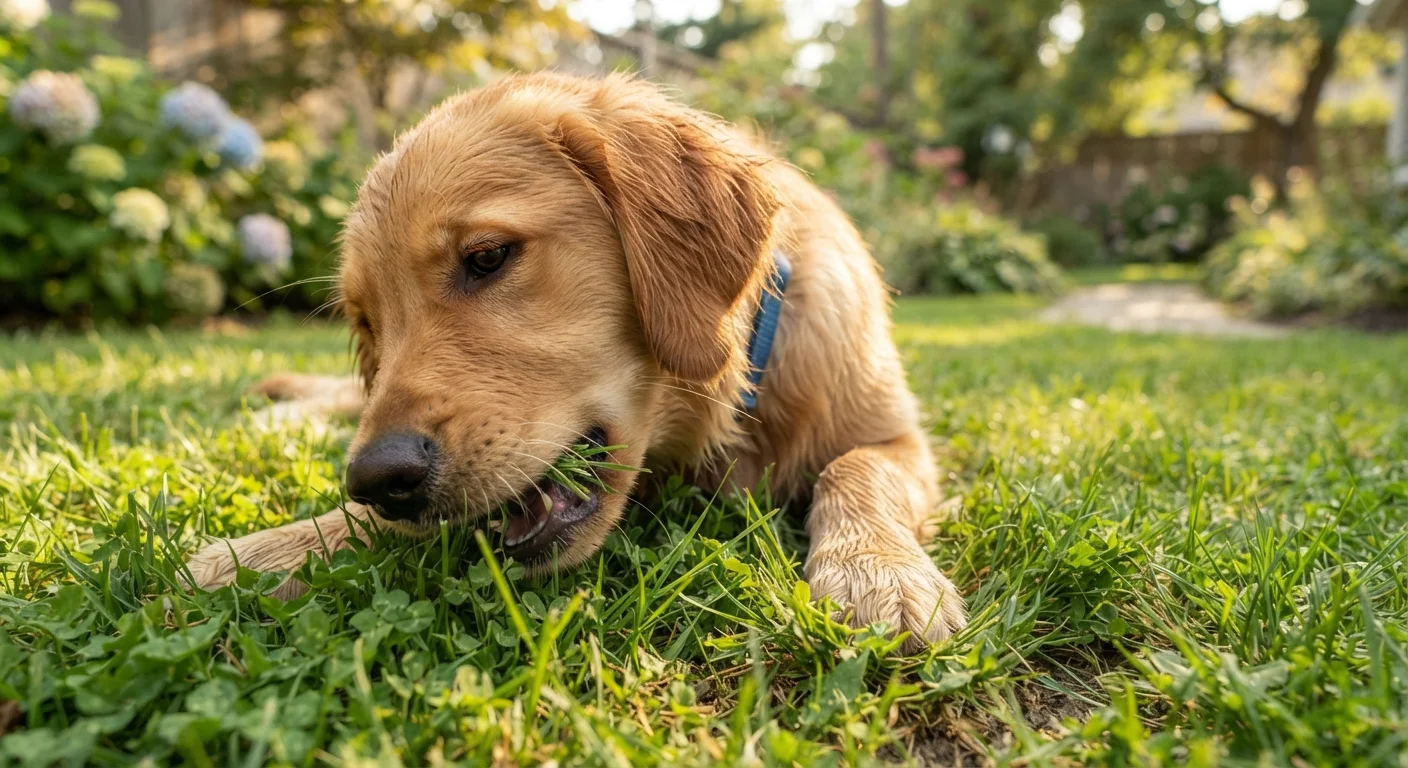
Key Takeaways
- Grass-eating is normal in most dogs and rarely signals a serious medical problem.
- Fewer than one in four dogs vomit after eating grass, disproving the self-medication theory for most cases.
- Possible causes include instinct, fiber needs, boredom, and simply enjoying the taste or texture.
- Frequent grass-eating paired with vomiting, lethargy, or appetite loss warrants a vet visit.
- Pesticide-treated or chemically fertilized grass poses a real health risk to grazing dogs.
- Diet adjustments or more enrichment may reduce excessive grass-seeking behavior.
Dogs Eating Grass
Grass-eating in dogs, sometimes called pica when it involves non-food items broadly, is an extremely common behavior observed in dogs of all ages and breeds. Most dogs graze on grass occasionally without any apparent illness before or after. The exact reasons aren't fully understood, but evidence points to a mix of instinct, digestive response, boredom, and dietary factors.
A 2008 survey published in Applied Animal Behaviour Science found that grass was the most commonly consumed plant material by dogs, and that fewer than 25% of dogs vomited afterward - challenging the popular belief that dogs eat grass specifically to induce vomiting.
Why Dogs Eat Grass: The Leading Explanations
Walk your dog past a patch of lawn and there's a reasonable chance they'll stop to snack. Grass-eating is one of the most frequently reported canine behaviors, yet it still puzzles many owners. Here's what current veterinary thinking and behavioral research suggest.
Instinct and ancestral diet
Wild canid ancestors consumed whole prey, including the stomach contents of plant-eating animals. Grazing may be a residual instinct with no specific function in modern pet dogs - simply something hardwired that hasn't been bred out.
A fiber fix
Grass is a source of roughage. Some veterinarians propose that dogs eating a low-fiber diet may seek grass to meet a digestive need. If your dog's grass-eating is persistent, it may be worth reviewing their current food. Our guide to navigating dog food options covers how diet composition can affect digestive health.
Boredom and sensory engagement
Dogs that aren't getting enough mental or physical stimulation sometimes develop repetitive behaviors - and grazing can be one of them. The texture, taste, and smell of fresh grass may simply be interesting. Breed-appropriate exercise plays a larger role in overall dog behavior than many owners realize.
They just like it
Not every behavior has a medical explanation. Many dogs appear to enjoy the taste of grass, particularly fresh spring growth. That's a perfectly valid and benign reason.
<25%
Dogs that vomit after eating grass
A survey published in Applied Animal Behaviour Science (2008) found fewer than one in four grass-eating dogs vomited afterward.
~79%
Dog owners who report grass-eating
The same 2008 study found grass to be the most commonly consumed plant material among the surveyed dog population.
<10%
Dogs appearing ill before eating grass
The study found that fewer than 10% of dogs showed signs of illness prior to eating grass, challenging the self-medication explanation.
When Grass-Eating Becomes a Warning Sign
For most dogs, occasional grass-eating requires no action. But certain patterns deserve closer attention.
- Sudden increase in frequency: If a dog that rarely grazed now seeks grass obsessively, something may have changed - diet, stress, or an internal issue.
- Eating grass then vomiting repeatedly: One episode isn't alarming. Repeated cycles within a short period can indicate gastrointestinal irritation or illness.
- Accompanying symptoms: Lethargy, loss of appetite, diarrhea, blood in stool, or weight loss alongside grass-eating should prompt a vet visit. These are signs your dog may be unwell beyond ordinary grazing. See our article on subtle signs of pain in dogs to understand what else to watch for.
- Eating non-grass items too: If a dog is consuming soil, fabric, or other non-food materials along with grass, that pattern - true pica - warrants professional evaluation.
Quick Rule of Thumb for Owners
If your dog eats grass occasionally, acts normal afterward, and you're confident the lawn is chemical-free, there's typically nothing to worry about. Keep a brief mental note of frequency and any accompanying symptoms - that context is exactly what your vet will ask about if you do end up making an appointment.
Keeping Grass-Eating Safe and Managing the Behavior
If your dog grazes and you're comfortable it's within the normal range, the priority is safety, not elimination of the behavior.
Check for lawn chemicals
Pesticides, herbicides, and synthetic fertilizers applied to grass can be harmful to dogs. Know what has been applied to any lawn your dog accesses - including neighbors' yards and public parks where you have no control over treatment schedules. When in doubt, redirect your dog away from the area.
Consider dietary adjustments
If grass-eating seems linked to digestion, a higher-fiber food or a dietary review with your veterinarian is a reasonable next step. Avoid making major diet changes without professional guidance.
Add enrichment
If boredom appears to be a factor, structured play, puzzle feeders, or additional walks may reduce the behavior naturally. Dogs with adequate mental stimulation tend to show fewer repetitive behaviors overall.
Grow a safe indoor patch
Some owners grow small trays of wheatgrass or oat grass indoors as a safe, chemical-free alternative for dogs that seem drawn to grazing. This keeps the behavior contained and eliminates exposure to treated outdoor lawns.
This article is for general informational purposes only and is not a substitute for professional veterinary advice. Always consult a licensed veterinarian if you have concerns about your dog's health or behavior.