

Key Takeaways
- CPO programs vary widely - manufacturer-backed and dealer-certified programs offer different levels of protection.
- An inspection checklist can have 100+ points but still exclude major components like the engine or transmission.
- CPO warranties are typically extensions of the original factory warranty, not separate comprehensive coverage.
- A vehicle history report and independent inspection remain essential even when buying CPO.
- Price premiums for CPO vehicles can be significant - understanding exactly what you're paying for matters.
- Always request the full written inspection report and warranty terms before agreeing to a CPO purchase.
Certified Pre-Owned (CPO)
A certified pre-owned vehicle is a used car that has passed a manufacturer- or dealer-defined inspection process and typically comes with an extended warranty. The CPO label is meant to signal that the vehicle meets certain quality standards beyond what a standard used car listing offers. However, CPO programs are not uniform - what one automaker guarantees can differ significantly from another's program.
Manufacturer-backed CPO programs are distinct from dealer-certified programs. Manufacturer programs are administered through franchised dealerships and backed by the automaker's warranty infrastructure; dealer-certified programs are set by the individual dealership with no factory backing.
What a CPO Designation Actually Means
The phrase "certified pre-owned" carries an implied promise of quality, but it is not a regulated term. Any dealership can call a vehicle certified; only manufacturer-backed programs carry standardized criteria enforced by the automaker. Understanding that distinction is the starting point for evaluating whether a CPO price premium is justified.
Manufacturer CPO programs - offered through franchised dealerships - typically require vehicles to meet age and mileage thresholds (commonly under five or six years old and under 80,000 miles), pass a multi-point inspection, and carry an extended warranty backed by the automaker. Dealer-certified programs lack these guardrails, and the inspection criteria and warranty terms are set entirely at the dealership's discretion.
Before assuming you're buying meaningfully enhanced protection, find out whether the program is manufacturer-backed or dealer-defined. That single question shapes everything else about the coverage you're receiving.
What the Inspection Actually Covers - and What It Doesn't
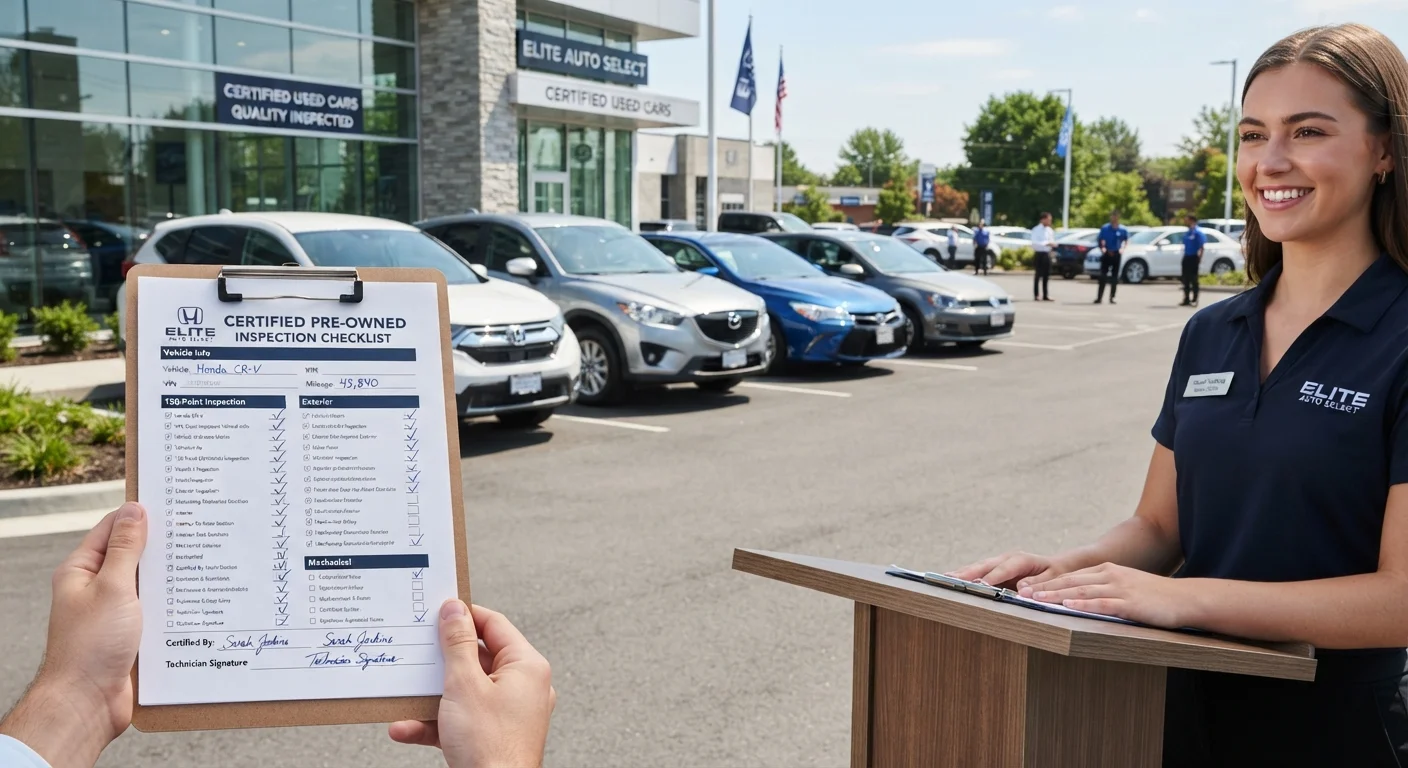
CPO inspection checklists can run to 150 or more individual points, which sounds thorough. But the scope of those points matters as much as the number. Many checklists focus on functional checks - lights, wipers, horn, fluid levels - rather than in-depth mechanical assessments of the engine, transmission, or suspension components.
Always Request the Full Inspection Report
Ask the dealer for the completed, point-by-point CPO inspection document - not just a summary certificate. Review which items passed, which were repaired, and which were noted as within acceptable minimums. This gives you a factual baseline for the vehicle's condition at the time of sale.
Specific exclusions are often buried in the fine print. Wear items such as brake pads, tires, and wiper blades are commonly excluded from CPO warranty coverage even if they were checked during inspection. A vehicle can pass a CPO inspection with components that are near the end of their service life, as long as they meet minimum thresholds set by the program.
The most reliable way to understand what was actually evaluated is to request the completed inspection report - not just confirmation that an inspection occurred. Reputable programs will provide this documentation. If a dealer is reluctant to share it, treat that as a meaningful signal. For a deeper look at what a professional mechanical review covers independently, see what a pre-purchase inspection actually covers.
The Warranty: Coverage, Duration, and Limits
CPO warranties are generally structured as extensions of the original factory warranty rather than standalone policies. This means the coverage you receive depends on how much of the original warranty has already elapsed. A vehicle that is five years old may have little factory powertrain warranty remaining, making the CPO extension its primary coverage layer - but the terms of that extension vary significantly by program.
100+
Inspection points in a typical manufacturer CPO checklist
Many automaker CPO programs publish their inspection criteria; point counts vary but commonly exceed 100 across mechanical, safety, and cosmetic categories.
Varies
CPO warranty duration across programs
Manufacturer CPO warranty extensions differ substantially - some programs add one year of coverage beyond the factory warranty, others extend to seven years or 100,000 miles from the original in-service date.
Key details to verify in any CPO warranty include: the deductible per service visit, which components are explicitly excluded, whether coverage is bumper-to-bumper or powertrain-only, the duration in years and miles, and whether the warranty is transferable if you sell the vehicle privately before it expires.
Some programs also include roadside assistance and loaner vehicle provisions; others do not. These ancillary benefits add genuine value but should not substitute for understanding the core mechanical coverage. Reviewing the actual warranty document - not a summary brochure - is the only way to know what you're getting. If any of the terminology is unfamiliar, a plain-language glossary of key car-buying terms can help you parse the language before you sign.
What You Should Still Verify Independently
The CPO designation does not replace due diligence - it supplements it. A vehicle history report is an independent check that reveals title issues, reported accidents, odometer discrepancies, and service records that a dealer's inspection cannot retroactively address. Even a vehicle that passes a CPO inspection can carry a history worth knowing about. Understanding a vehicle history report explains what to look for and which flags matter most.
Beyond the history report, a physical inspection by a mechanic you choose independently remains valuable. Dealership technicians conduct CPO inspections with their employer's interests in mind; an independent mechanic has no stake in whether you buy the car. For a thorough walkthrough of what that process involves, see what to inspect before buying a used car.
CPO Eligibility Doesn't Guarantee a Clean History
Some manufacturer CPO programs permit vehicles with prior accident history, provided repairs were completed to defined standards. Others exclude any vehicle with reported structural damage. Check the specific program's eligibility rules and cross-reference with an independent vehicle history report regardless of what a dealer represents verbally.
The CPO premium - the additional cost over a comparable non-certified used vehicle - can range from a few hundred to several thousand dollars depending on the vehicle and program. Weigh that premium against the specific warranty terms and remaining coverage duration. A CPO label alone does not guarantee the premium is proportionate to the protection received.