

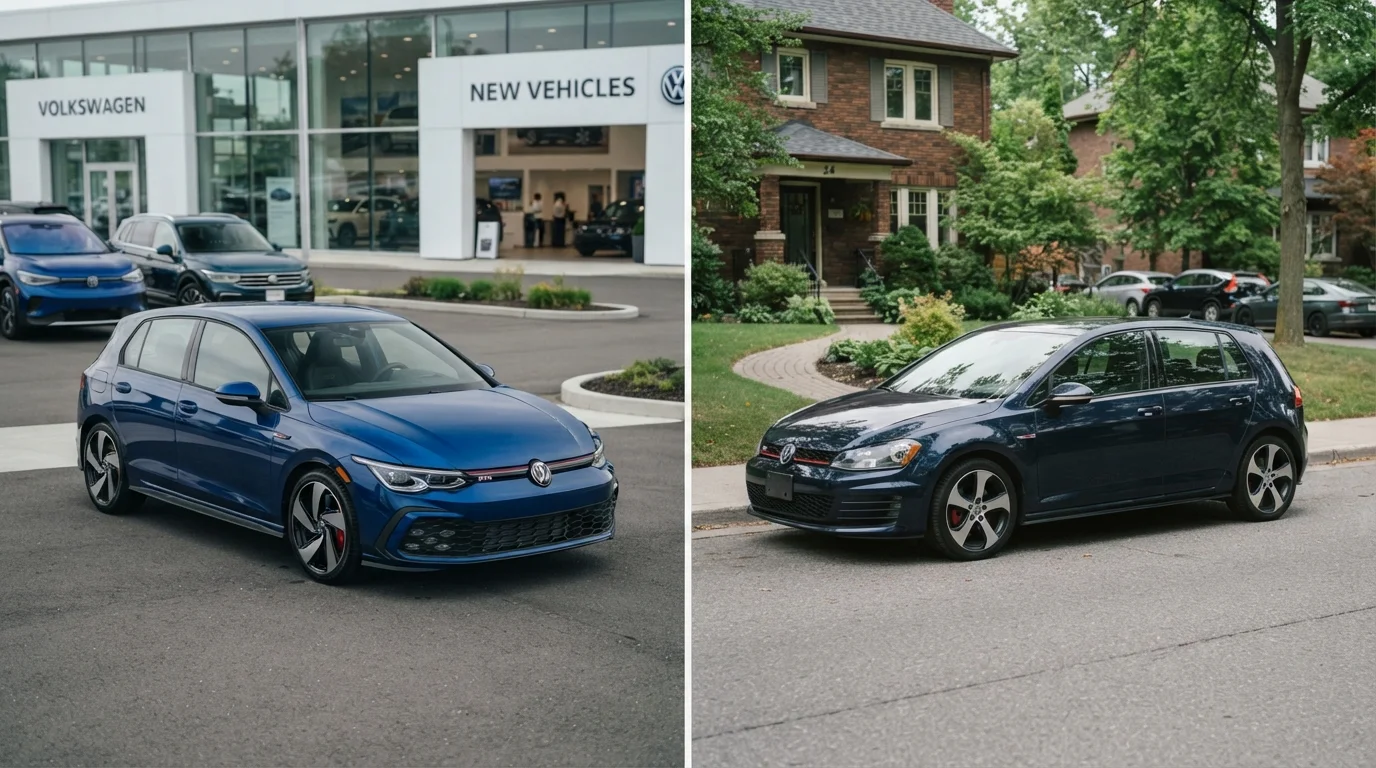
Key Takeaways
- New cars depreciate fastest in the first one to three years, which benefits used-car buyers.
- New cars offer manufacturer warranties and current safety technology that used vehicles may lack.
- Used cars typically carry lower purchase prices, taxes, and insurance premiums.
- Certified Pre-Owned programs can narrow the reliability gap between new and used vehicles.
- Your financing rate, total budget, and risk tolerance should shape the decision as much as price.
- Due diligence - inspection, history report, test drive - is essential when buying used.
Option A
New Car
The full-warranty, latest-tech, zero-history option.
Best for: Buyers who prioritize reliability certainty, manufacturer warranties, and access to the latest safety and technology features.
Option B
Used Car
The depreciation-savvy, lower-cost alternative.
Best for: Buyers who want to avoid steep early depreciation and are comfortable doing more due diligence before purchase.
If you want maximum peace of mind and the latest safety features
New Car
A new vehicle comes with a full manufacturer warranty and the most current driver-assistance and safety technology, removing most of the uncertainty around reliability and repair costs for the first several years.
If minimizing total cost of ownership is your top priority
Used Car
Letting someone else absorb the sharpest depreciation drop means paying significantly less for a vehicle that may still have many reliable miles ahead of it.
If you want used-car savings with some new-car assurance
Used Car
A Certified Pre-Owned (CPO) vehicle - inspected and backed by a manufacturer-extended warranty - offers a practical middle ground between full new-car pricing and a standard used-car purchase.
If you drive high annual mileage and need long-term reliability
New Car
Starting from zero miles with a full powertrain warranty provides a longer financial cushion against major repair costs for drivers who rack up miles quickly.
If you're a first-time buyer on a tight monthly budget
Used Car
Lower sticker prices, reduced registration fees, and generally lower insurance premiums make used vehicles easier to finance and own on a constrained budget.
The Depreciation Divide
Depreciation is the single biggest financial force separating new and used vehicles. A new car can lose a significant portion of its value in the first year of ownership - with the steepest drop typically occurring the moment it leaves the lot. By years two and three, that curve begins to flatten, which is why a two- or three-year-old vehicle can represent strong value relative to its original price.
For used-car buyers, this dynamic is an advantage: someone else has absorbed the sharpest loss. For new-car buyers, the counter-argument is that the full warranty, zero-mile condition, and ownership history are worth paying a premium for - especially if you plan to keep the vehicle for many years and spread that depreciation cost over a long ownership period.
The math gets more nuanced once financing enters the picture. Interest rates, loan terms, and your down payment all affect how much you ultimately pay. See how those variables interact in our breakdown of leasing vs. financing.
| Criterion | New Car | Used Car |
|---|---|---|
| Purchase Price | Full market price | Lower, post-depreciation price |
| Depreciation Risk | Buyer absorbs early drop | Steepest drop already absorbed |
| Manufacturer Warranty | Full coverage included | Expired or limited (CPO extends it) |
| Technology & Safety Features | Latest available | Reflects model year; may be dated |
| Insurance Cost | Higher (comprehensive required) | Generally lower |
| Sales Tax | Based on full new price | Based on lower purchase price |
| Vehicle History | None - starts clean | Unknown unless verified |
| Repair & Maintenance Risk | Lower near-term risk | Higher depending on age/mileage |
| Financing Rates | Often lower rates available | Rates typically slightly higher |
Reliability, Warranties, and the Used-Car Risk
New cars come with manufacturer warranties that typically cover the powertrain for five years or more and the bumper-to-bumper components for three years. That coverage provides a financial backstop against unexpected repair bills during a period when repair needs are statistically low anyway.
Used vehicles carry more uncertainty by definition - but how much depends heavily on the vehicle's age, mileage, and maintenance history. A Certified Pre-Owned (CPO) program, offered through many manufacturers' dealership networks, bridges some of that gap. CPO vehicles undergo a multi-point inspection and usually carry an extended manufacturer-backed warranty, offering more protection than a standard used-car purchase.
Regardless of CPO status, a thorough pre-purchase inspection by an independent mechanic and a vehicle history report are non-negotiable steps when buying used. Our guide on what to inspect before buying a used car walks through the key checks, and understanding a vehicle history report explains which red flags to watch for.
~20%
Typical first-year new car depreciation
Industry data consistently shows new vehicles losing roughly 15-20% of value in the first year, with total five-year depreciation often reaching 50-60% depending on make and model.
3-5 yrs
Typical bumper-to-bumper warranty on new vehicles
Most major manufacturers offer three-year bumper-to-bumper and five-year powertrain warranty coverage on new vehicles, though terms vary by brand and model.
~$28,000
Estimated average used vehicle transaction price (recent years)
Used vehicle prices fluctuate with market conditions, but the average transaction price for used cars has historically been substantially lower than for new vehicles.
Total Cost of Ownership Beyond the Sticker Price
Purchase price is only the starting point. Insurance premiums are generally higher on new vehicles because the lender requires comprehensive and collision coverage, and replacement costs are higher. Sales tax is calculated on the purchase price, so a lower used-car price means a lower tax bill. Registration fees in many states also scale with vehicle value or age, another edge for older vehicles.
Maintenance costs eventually tip in the other direction. An older vehicle may need more frequent repairs, and parts availability or labor complexity can add up. The question is whether the lower upfront cost and ownership expenses in the early years exceed what you'd spend on eventual repairs - a calculation that varies by vehicle make, mileage, and how long you plan to own it. Our article on keeping a car long-term vs. replacing it often examines how these patterns play out over time.
It's also worth separating fact from assumption before you commit. Several widely held beliefs about car buying - on both sides of the new-vs-used debate - don't hold up under scrutiny. Our look at common car-buying myths that cost people money is worth reading before you sign anything.
A Note on Certified Pre-Owned Vehicles
CPO programs are manufacturer-specific and vary in what they cover, how long the extended warranty lasts, and what inspection standards apply. Before treating a CPO designation as equivalent to a new-car warranty, review the specific terms for the brand and model you're considering. A CPO vehicle sold through an off-brand dealership may not carry the same manufacturer backing as one sold through an authorized franchise dealer.
Making the Decision Work for Your Situation
There's no universally correct answer between new and used - the right choice depends on your financial cushion, how long you plan to own, how many miles you drive annually, and your appetite for uncertainty. A buyer who keeps vehicles for ten or more years can spread new-car depreciation across a long ownership window, making the premium easier to justify. A buyer replacing vehicles every three to five years often benefits more from letting the first owner absorb that early value loss.
Once you've settled on a direction, think about what to do with your current vehicle. Trading it in at a dealership is convenient, but a private sale often nets more money. Our comparison of trade-in vs. private sale lays out the trade-offs clearly. And if you're buying from a private seller rather than a dealer, the protections and paperwork differ meaningfully - what changes about the transaction covers what to expect from each.