

| Red light urgency | Stop driving as soon as safe |
| Amber/yellow light urgency | Schedule service within a few days |
| Diagnostic standard | OBD-II (required on US vehicles since 1996) (EPA / CARB regulatory requirement) |
| TPMS required since | 2008 model year (US) (NHTSA TPMS mandate) |
| Fault code readers | Often available free at auto-parts retailers |
| Owner's manual | Primary reference for your specific vehicle's symbols |
How Dashboard Warning Lights Are Organized
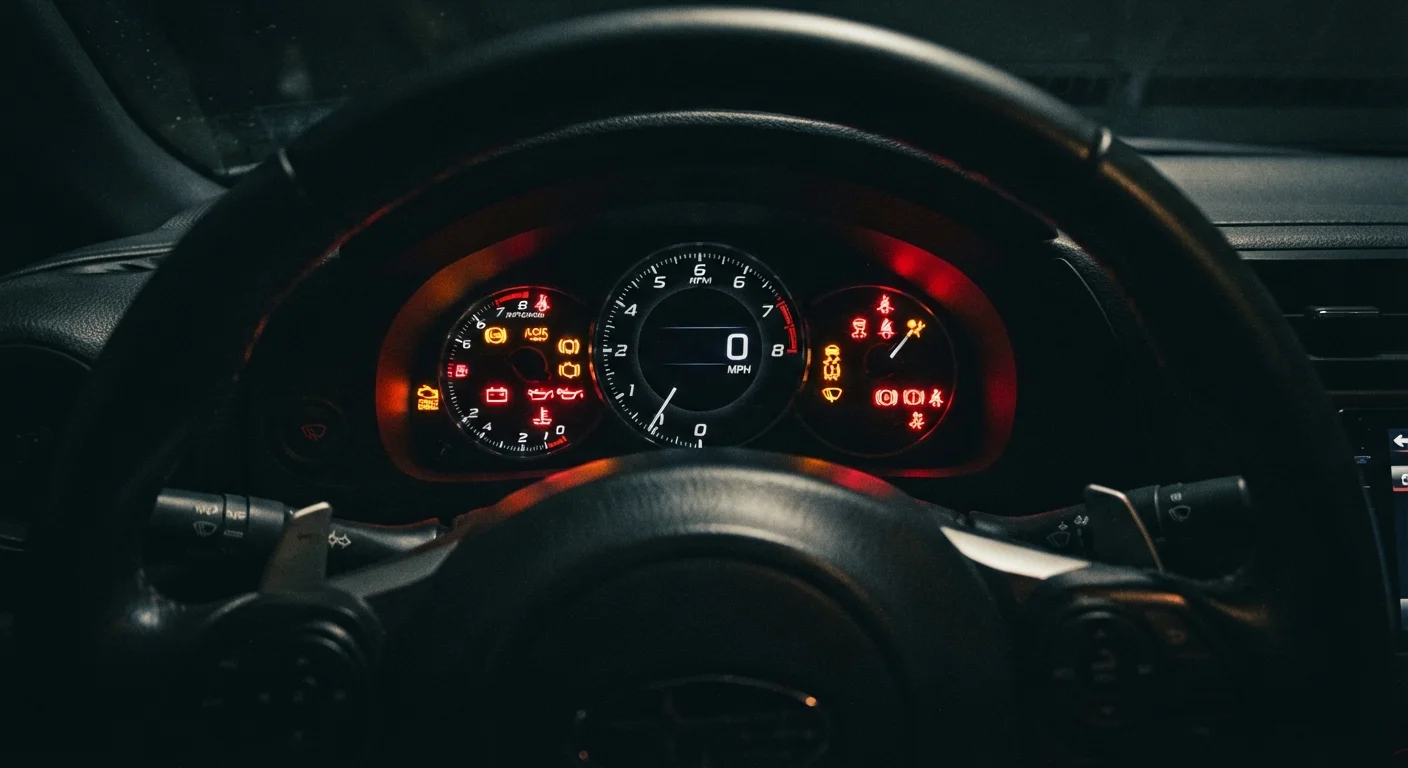
Modern vehicles use a standardized color-coding system to signal urgency. Understanding that system is the first step to interpreting any light correctly.
| Red light urgency | Stop driving as soon as safe |
| Amber/yellow light urgency | Schedule service within a few days |
| Diagnostic standard | OBD-II (required on US vehicles since 1996) (EPA / CARB regulatory requirement) |
| TPMS required since | 2008 model year (US) (NHTSA TPMS mandate) |
| Fault code readers | Often available free at auto-parts retailers |
| Owner's manual | Primary reference for your specific vehicle's symbols |
Red lights demand immediate attention. Stop driving as soon as it is safe to do so, because continuing may cause serious mechanical damage or create a safety hazard. Yellow or amber lights indicate a condition that needs attention soon - typically within a few days - but generally does not require you to pull over immediately. Green and blue lights are informational, confirming that a system (high beams, turn signals) is active.
Your owner's manual is the definitive reference for your specific vehicle. Light symbols vary slightly between manufacturers, so when in doubt, consult the manual before assuming the cause.
For a broader safety habit, run a quick pre-drive check each time you get behind the wheel - catching problems before you drive is always better than reacting mid-journey.
Common Warning Lights and What They Mean
The lights below appear across most passenger vehicles sold in the United States. Severity ratings reflect general industry guidance; your situation may differ.
OBD-II
On-Board Diagnostics, second generation - a standardized system required on US passenger vehicles since 1996 that monitors engine and emissions-related components and stores fault codes when a problem is detected.
Fault code (DTC)
A Diagnostic Trouble Code stored by the vehicle's computer when a sensor reading falls outside acceptable parameters. Codes can be read with a scanner to identify the specific system or circuit involved.
TPMS
Tire Pressure Monitoring System - a sensor-based system that alerts the driver when one or more tires drop significantly below the manufacturer's recommended inflation pressure.
ABS
Anti-lock Braking System - a safety system that rapidly modulates brake pressure during hard stops to prevent wheel lockup and help the driver maintain steering control.
Alternator
An engine-driven generator that keeps the battery charged and powers the vehicle's electrical systems while the engine is running. A failing alternator triggers the battery or charging warning light.
Coolant (antifreeze)
A fluid circulated through the engine and radiator to regulate operating temperature. Low coolant level or a system leak can cause rapid overheating.
Engine Warning (Check Engine)
One of the most misunderstood lights on any dashboard. A steady amber check-engine light indicates the onboard diagnostic system (OBD-II) has detected a fault - ranging from a loose gas cap to a misfiring cylinder. A flashing check-engine light signals an active misfire that can damage the catalytic converter; reduce speed and have the vehicle inspected promptly. A mechanic or auto-parts retailer can read the fault codes for free in most cases.
Oil Pressure Warning
A red oil can symbol means the engine is not receiving adequate oil pressure. Stop the vehicle as soon as it is safe and shut off the engine. Running an engine with low oil pressure can cause irreversible internal damage within minutes. Check the oil level with the dipstick once the engine has cooled, and do not restart until the cause is identified.
Temperature Warning
A red thermometer submerged in wavy lines indicates the engine coolant is overheating. Pull over safely, turn off the engine, and allow it to cool completely before opening the hood. Never open a hot radiator cap - pressurized coolant can cause severe burns.
Battery / Charging System
This amber or red light (often a battery icon) signals the charging system is not maintaining adequate voltage. Common causes include a failing alternator, corroded battery terminals, or a worn drive belt. The vehicle may continue operating briefly on battery power alone, but electrical systems will fail progressively. Drive directly to a repair facility if the light appears.
Tire Pressure Monitoring System (TPMS)
An amber symbol resembling a cross-section of a tire with an exclamation point means one or more tires has dropped significantly below the recommended pressure. Underinflated tires reduce fuel efficiency, increase wear, and can fail unexpectedly at highway speeds. Check all four tires with a gauge and inflate to the pressure listed on the sticker inside the driver's door jamb - not the number molded into the tire sidewall.
ABS Warning
The letters ABS in amber indicate a fault in the anti-lock braking system. Your standard brakes will still function, but the ABS - which prevents wheel lockup during hard stops - may not activate when needed. Drive with extra following distance and have the system diagnosed soon.
Staying current with scheduled service reduces the frequency of unexpected warning lights. See how maintenance intervals actually work for a clearer picture of what your owner's manual is asking of you.
When to Stop Immediately vs. When You Can Wait
Parking Brake vs. Brake System Warning
Many vehicles share one light for both the engaged parking brake and a brake system fault. If the light appears while driving with the parking brake fully released, treat it as a brake system warning and stop safely as soon as possible. Low brake fluid or a hydraulic fault can significantly reduce stopping ability. Do not confuse this light with the ABS warning, which is typically labeled separately.
A simple rule of thumb: red means stop, yellow means schedule. That said, context matters. A yellow TPMS light on a highway in winter demands quicker action than the same light in a parking lot in mild weather.
Lights that should prompt you to pull over and stop the engine as soon as safely possible:
- Oil pressure warning (red)
- Engine temperature warning (red)
- Brake system warning (red, separate from the parking-brake indicator)
- A flashing check-engine light
Lights that warrant a service appointment within a few days:
- Steady check-engine light (amber)
- ABS warning
- TPMS alert
- Battery or charging warning
Ignoring warning lights rarely saves time or money. A low-cost sensor fault left unaddressed frequently leads to expensive cascading damage. If you are purchasing a used vehicle and the seller cannot explain an active dashboard light, treat it as a serious concern - our guide on reading a vehicle history report explains other signals worth scrutinizing before you buy.
When any light's cause is unclear, the safest course is to have a qualified mechanic connect a diagnostic scanner and interpret the fault codes. Modern vehicles store detailed data that makes diagnosis far more efficient than guesswork.