

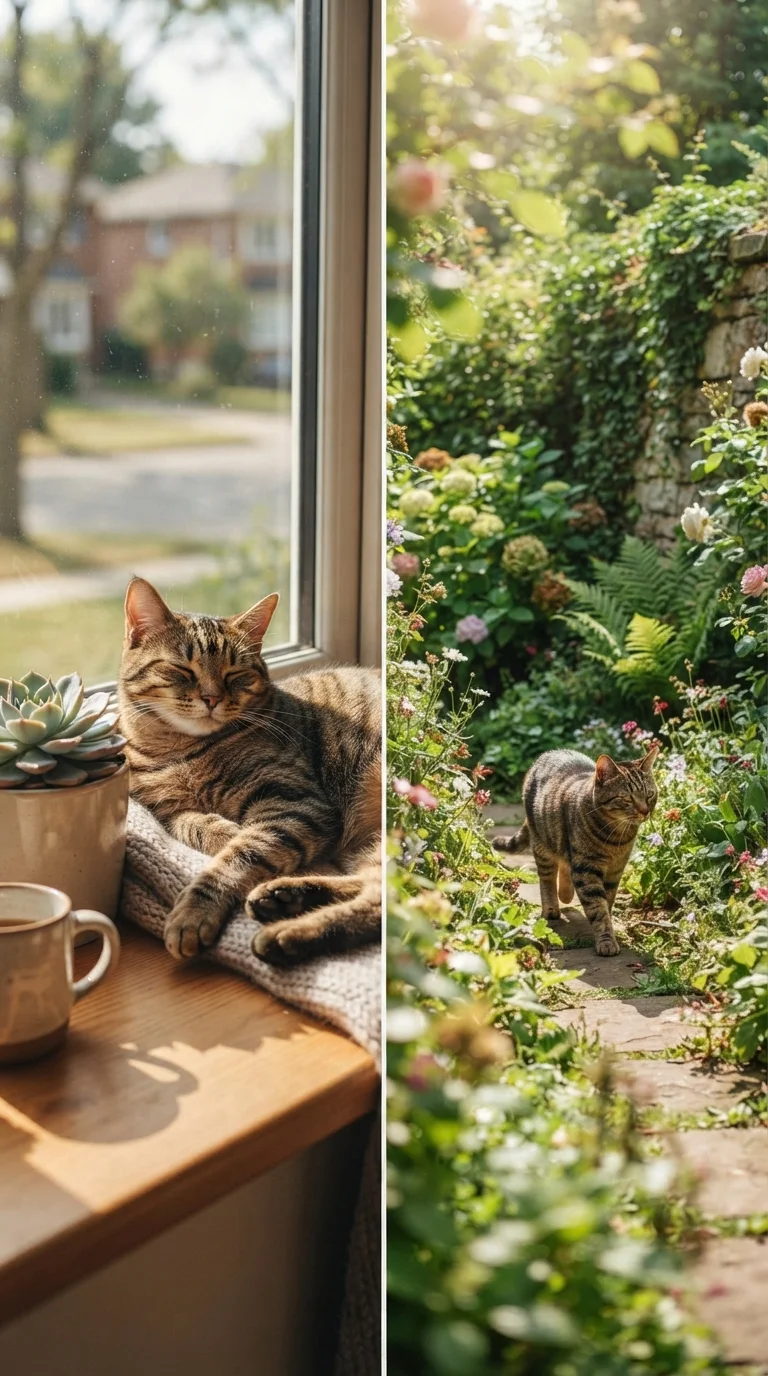
Key Takeaways
- Indoor cats typically live significantly longer than outdoor cats, according to veterinary estimates.
- Outdoor cats face higher risks from traffic, predators, infectious disease, and toxins.
- Indoor cats can develop obesity and behavioral problems without adequate enrichment and stimulation.
- Supervised outdoor access or enclosed catios can offer a middle-ground option for many owners.
- Spaying, neutering, and regular veterinary care meaningfully improve outcomes for cats in either setting.
Option A
Indoor Cat
The protected, controlled-environment choice.
Best for: Owners who prioritize longevity, reduced disease exposure, and a safe, predictable home environment for their cat.
Option B
Outdoor Cat
The free-roaming, behaviorally stimulated alternative.
Best for: Cats with strong roaming instincts in low-traffic, low-predator areas where owners accept the associated risks.
If your top priority is your cat living the longest, healthiest life possible
Indoor Cat
Research consistently associates indoor living with longer lifespans and lower rates of trauma, infectious disease, and parasite exposure.
If your cat shows persistent roaming behavior and you live in a safe, rural area
Outdoor Cat
Some cats with strong territorial instincts may experience less stress with outdoor access, though risks must be managed carefully.
If you want to balance safety with behavioral enrichment
Indoor Cat
A well-enriched indoor environment - with climbing structures, puzzle feeders, and play sessions - can meet most feline behavioral needs without outdoor hazards.
If you're concerned about boredom and under-stimulation indoors
Indoor Cat
Supervised outdoor time via a leash, enclosed catio, or garden run addresses stimulation needs while keeping risks controlled.
What the Lifespan Data Shows
Veterinary and animal welfare organizations widely report that indoor cats live considerably longer on average than cats who roam outdoors freely. Estimates commonly cited in the veterinary literature suggest indoor cats may live 12-18 years on average, while outdoor cats often average closer to 2-5 years - though these figures vary depending on environment, region, and individual circumstances.
The gap is largely explained by hazard exposure. Outdoor cats face vehicle traffic, predation by dogs and wildlife, territorial fights with other cats, and accidental ingestion of pesticides, antifreeze, or toxic plants. Bite wounds from other animals are also a primary route for disease transmission.
| Criterion | Indoor Cat | Outdoor Cat |
|---|---|---|
| Average lifespan (estimated) | 12-18 years | 2-5 years |
| Infectious disease risk | Low | High (FeLV, FIV, URI) |
| Parasite exposure | Low to minimal | High (fleas, ticks, worms) |
| Trauma risk (traffic, predators) | Very low | Significant |
| Obesity risk | Higher without enrichment | Lower due to activity |
| Behavioral stimulation | Requires active enrichment | Naturally higher |
| Household hazard exposure | Present (plants, chemicals) | Lower indoors; higher outdoors |
That said, lifespan alone doesn't capture the full picture. Quality of life - physical health, behavioral well-being, and stress levels - matters alongside longevity. Both settings carry specific risks that responsible owners should understand.
Distinct Health Risks on Each Side
Outdoor risks are acute and varied. Infectious diseases such as feline leukemia virus (FeLV) and feline immunodeficiency virus (FIV) spread through contact with infected cats - a direct hazard for free-roaming animals. Parasite burdens, including fleas, ticks, and intestinal worms, are also substantially higher outdoors. Upper respiratory infections circulate readily among cats that share territory.
Indoor risks tend to be chronic rather than acute. Without sufficient activity and mental engagement, indoor cats are prone to obesity, which is itself a gateway condition for diabetes, joint problems, and urinary tract disease. Boredom and under-stimulation can manifest as overgrooming, aggression, or anxiety. Certain household hazards - toxic plants, open appliances, and string-like objects - also pose real dangers. See our guide to setting up a safe home environment for a practical household audit checklist.
2-5 yrs
Estimated average outdoor cat lifespan
Veterinary welfare organizations commonly cite this range compared to 12-18 years for indoor-only cats, reflecting cumulative hazard exposure.
~50%
Of US cats estimated to be overweight
The Association for Pet Obesity Prevention has reported that roughly half of domestic cats in the US are overweight or obese, a trend linked to indoor sedentary lifestyles.
FeLV & FIV
Top infectious disease risks for outdoor cats
Both feline leukemia virus and feline immunodeficiency virus spread primarily through contact with infected cats, making outdoor exposure a significant transmission risk.
Nutrition plays a meaningful role in managing indoor cat health risks. A cat's dietary needs shift across life stages, and matching food type and quantity to activity level helps prevent obesity in less active indoor cats.
Behavioral Well-Being: A Nuanced Question
Cats are facultative predators with strong instincts for exploration, hunting, and territorial behavior. Some cats - particularly those raised outdoors or with high activity drives - may show genuine signs of frustration when confined indoors without adequate outlets.
However, research on cat welfare does not support the idea that outdoor access is inherently necessary for feline contentment. Cats raised indoors from kittenhood typically adapt well to indoor environments. The key variable is enrichment. Window perches, vertical climbing space, interactive play, and puzzle feeders can satisfy hunting instincts effectively. Our guide to keeping indoor cats mentally engaged covers a range of evidence-informed strategies.
For cats that seem restless indoors, supervised outdoor time on a harness or access to an enclosed catio - a secure outdoor enclosure - represents a practical compromise supported by many veterinarians. Building a daily routine aligned with your cat's natural rhythms also helps reduce stress and restlessness regardless of living situation.
The 'Catio' Option: A Growing Middle Ground
Enclosed outdoor structures known as catios allow cats to experience fresh air, outdoor sights, and natural stimuli without free-roaming hazards. They range from small window boxes to large walk-in enclosures. Many veterinarians and animal behaviorists consider them a practical compromise for owners who want to offer outdoor enrichment while managing safety risks. They are particularly useful for cats that show signs of frustration in purely indoor environments.
Factors That Improve Outcomes in Either Setting
Regardless of whether a cat lives indoors or ventures outside, several measures consistently improve health outcomes:
- Spaying and neutering: Reduces roaming behavior, lowers disease transmission risk, and is associated with reduced rates of certain cancers. Timing matters - discuss the procedure and ideal age with your veterinarian.
- Vaccination: Core vaccines protect against several serious infectious diseases regardless of lifestyle, and some vaccines are particularly important for cats with outdoor exposure.
- Parasite prevention: Flea, tick, and intestinal worm prevention is especially important for outdoor cats, but indoor cats are not entirely risk-free and should be assessed by a vet.
- Regular veterinary check-ups: Annual or biannual examinations allow early detection of conditions like dental disease, kidney problems, and weight issues before they become serious.
- Appropriate diet: Food format choices can affect hydration and dental health - factors relevant to both indoor and outdoor cats.
This article is for general informational purposes only and does not constitute veterinary advice. Always consult a licensed veterinarian for guidance specific to your cat's health, behavior, and environment.