

Key Takeaways
- Spaying removes a female cat's ovaries and uterus; neutering removes a male cat's testicles.
- Both procedures are performed under general anesthesia and are among the most routine surgeries in veterinary medicine.
- Veterinary guidelines generally recommend spaying or neutering cats around five to six months of age, though earlier or later timing may be appropriate in some cases.
- Spaying eliminates the risk of uterine infections and significantly reduces the risk of mammary tumors in females.
- Neutering reduces roaming, spraying, and aggression in male cats.
- Always consult your veterinarian to determine the right timing and approach for your individual cat.
Spaying and Neutering
Spaying and neutering are surgical procedures that remove a cat's reproductive organs, preventing them from producing offspring. Spaying refers to the removal of the ovaries and usually the uterus in female cats; neutering refers to the removal of the testicles in male cats. Both procedures are performed under general anesthesia by a licensed veterinarian.
The standard spay procedure is an ovariohysterectomy (removal of ovaries and uterus), though ovariectomy (ovaries only) is also practiced. The neuter procedure is called an orchiectomy.
What the Procedures Actually Involve
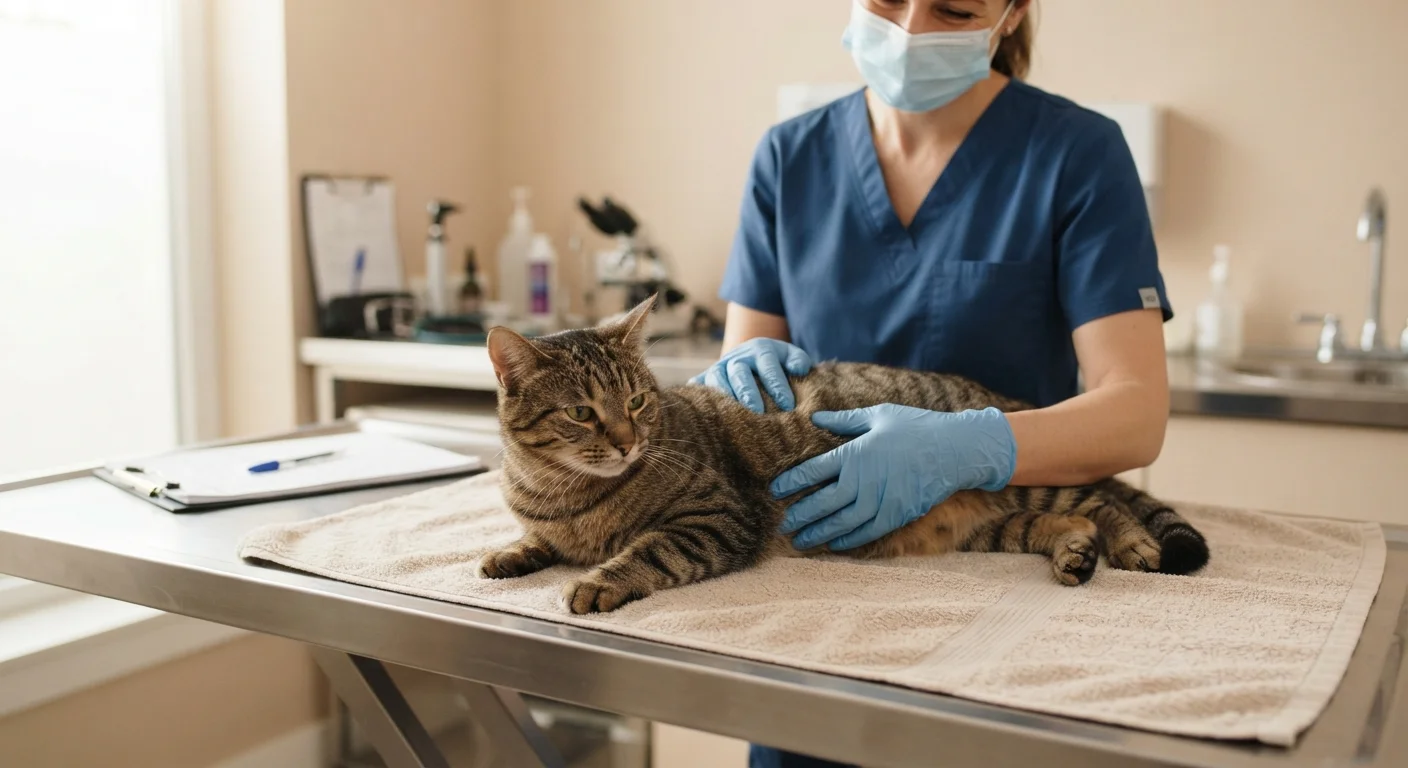
Spaying (for females) and neutering (for males) are routine surgical procedures performed under general anesthesia. The cat is fully unconscious and monitored throughout by veterinary staff.
In a standard spay, the veterinarian makes a small incision in the abdomen and removes the ovaries and uterus. In a neuter, a small incision is made near the scrotum, and both testicles are removed. Both surgeries typically take 20 to 45 minutes for an otherwise healthy, young cat. Most cats go home the same day.
Recovery involves restricted activity for about a week, keeping the incision site clean and dry, and following the veterinarian's guidance on pain management. Most cats resume normal behavior within 10 days. An e-collar (the familiar cone) may be recommended to prevent the cat from licking the incision.
Prepare Your Home for Recovery
Before your cat's surgery, set up a quiet, warm space away from other pets and household activity. Have food, water, and a clean litter box easily accessible at floor level so your cat doesn't need to jump. Follow your vet's post-operative instructions carefully - particularly around activity restriction and monitoring the incision site.
Why Timing Matters
The timing of spaying or neutering affects both health outcomes and behavioral development. Most veterinary organizations in the United States - including the American Veterinary Medical Association - support spaying or neutering cats around five to six months of age, before sexual maturity.
Spaying a female cat before her first heat cycle substantially reduces her lifetime risk of mammary (breast) tumors, which are malignant in roughly 85-90% of cats. Each heat cycle she experiences before being spayed increases that risk incrementally. Spaying also eliminates the risk of pyometra, a potentially life-threatening uterine infection that can develop in intact females.
For male cats, early neutering reduces or prevents hormone-driven behaviors: roaming, urine spraying to mark territory, and inter-cat aggression. Unneutered males that roam are at higher risk of injury and infectious disease - a concern explored further in our article on indoor versus outdoor cat risks.
Some veterinarians and researchers are studying whether very early or delayed neutering in certain large breeds affects joint development. If you have questions specific to your cat's breed or health history, your vet is the right resource for individualized guidance.
~85-90%
Feline mammary tumors that are malignant
According to veterinary oncology literature, the vast majority of mammary tumors in cats are malignant, making early spaying a meaningful preventive measure.
~10 days
Typical post-surgical recovery time
Most healthy cats recover from spay or neuter surgery within one to two weeks, based on standard veterinary care guidelines.
Thousands
Kittens one unspayed cat can produce over her lifetime
Feline reproductive rates mean a single intact female and her descendants can theoretically produce thousands of offspring over several years, underscoring the role of spaying in population management.
Broader Benefits and Considerations for Cat Owners
Beyond individual health, spaying and neutering have meaningful implications for feline welfare broadly. Unplanned litters contribute significantly to shelter overcrowding. Understanding this context can help owners see the procedure not just as a personal health choice but as part of responsible cat ownership.
Behaviorally, neutered male cats are generally less likely to engage in territorial spraying - a concern that sometimes overlaps with litter box avoidance. If you're navigating litter habits, our article on common litter box mistakes covers related behavioral triggers worth reviewing.
A spayed or neutered cat may have slightly different caloric needs, so monitoring body condition and adjusting feeding accordingly is worthwhile. Routine care - grooming, daily schedules, and social introductions - remains just as important after the procedure. Our guides on grooming your cat at home and building a daily routine can help you support your cat's overall well-being.
“Spaying and neutering remain among the most impactful preventive health measures available to cat owners - reducing the risk of several serious diseases while also helping address the broader challenge of pet overpopulation.”
— American Veterinary Medical Association, National professional association for veterinarians in the United States
This article is for general informational purposes only and does not constitute veterinary advice. Always consult a licensed veterinarian for guidance specific to your cat's health and care needs.