

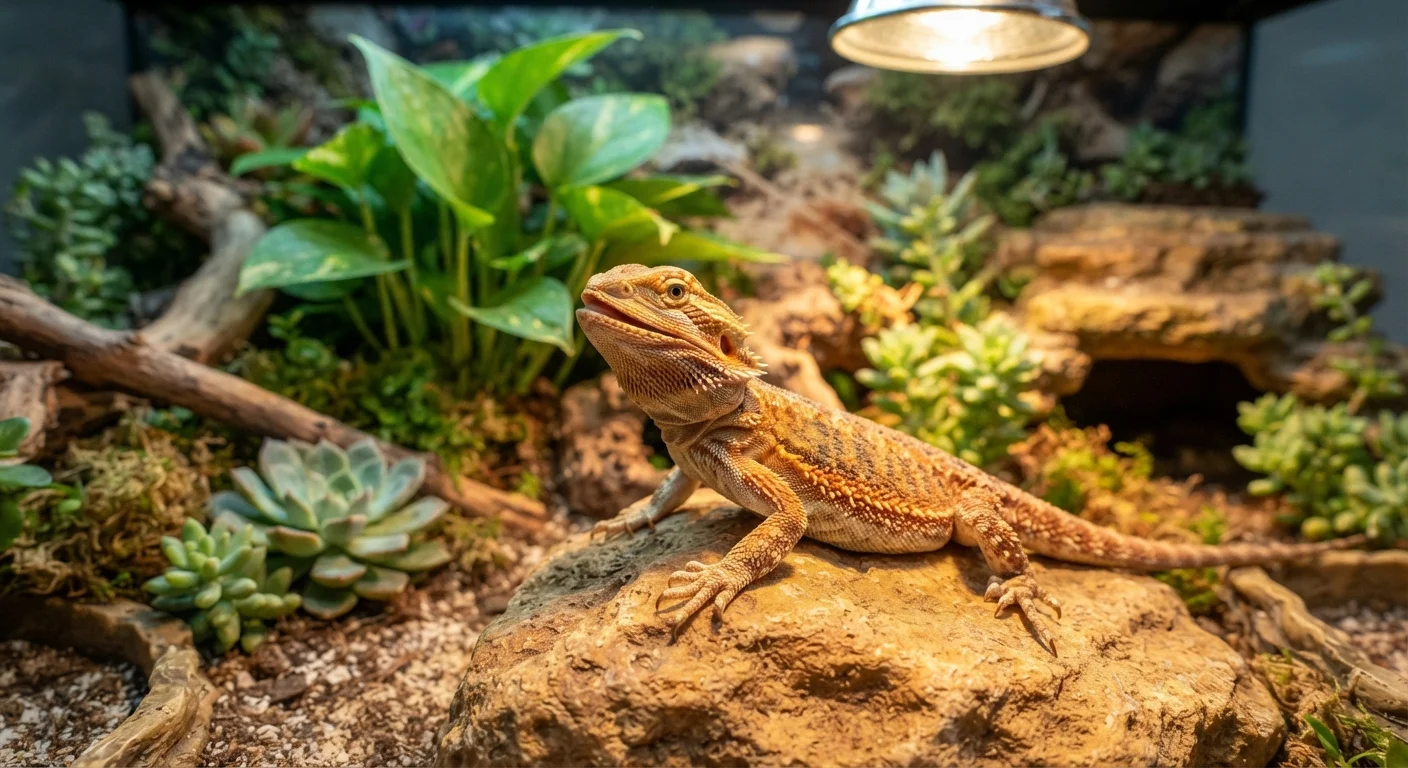
Key Takeaways
- Hatchlings need more protein and higher feeding frequency than juveniles or adults.
- UVB lighting is non-negotiable - without it, bearded dragons cannot metabolize calcium properly.
- Enclosure size should increase as your dragon grows, with adults needing at least 120 gallons.
- A basking spot of 100-110°F and a cool side of 80-85°F is the target temperature gradient.
- Regular, gentle handling from a young age builds trust and reduces stress in bearded dragons.
- Annual veterinary checkups with a reptile-experienced vet are essential at every life stage.
Understanding Life Stages
Bearded dragons (Pogona vitticeps) move through three distinct life stages - hatchling, juvenile, and adult - each with different care requirements. Getting these right from the start sets the foundation for a healthy, long-lived companion. Before committing, read our realistic overview of reptile ownership to understand the full scope of the responsibility.
- Hatchling (0-3 months): Rapid growth, highly active, requires frequent feeding and precise temperatures.
- Juvenile (3-12 months): Still growing quickly; diet begins shifting toward more plant matter.
- Adult (12+ months): Growth slows; diet becomes primarily leafy greens with insects as a supplement.
Recognizing where your dragon falls in this continuum helps you adjust enclosure size, feeding schedule, and handling expectations appropriately.
Enclosure Setup and Sizing
A properly sized enclosure is one of the most impactful investments you can make in your dragon's wellbeing. Glass terrariums are the most common choice because they retain heat effectively and allow visual monitoring.
- Hatchlings: A 20-gallon tank is adequate for the first few weeks, but many keepers start with a 40-gallon to reduce transitions.
- Juveniles: Upgrade to a 75-gallon enclosure around 3-4 months.
- Adults: A minimum of 120 gallons (typically 4'×2'×2') allows adequate movement, a proper temperature gradient, and enrichment space.
Substrate (the floor material) should be non-particulate for hatchlings - ceramic tile, reptile carpet, or paper towels all work well and reduce impaction risk. Adults can tolerate some particulate substrates, but ceramic tile remains a safe, easy-to-clean choice throughout life.
Start With the Right Size Enclosure
Many keepers start hatchlings in a 40-gallon tank rather than a smaller one, even though it seems oversized. This reduces the number of costly upgrades and gives the dragon room to establish its temperature gradient from day one. Add hides and decor to break up open space and help the hatchling feel secure.
Use our reptile preparation checklist to confirm your enclosure is fully ready before your dragon arrives home.
Lighting and Temperature
Lighting is where bearded dragon care most often goes wrong. These lizards originate from the arid woodlands of Australia and need both intense heat and UVB radiation to stay healthy.
Use a digital infrared thermometer gun rather than adhesive strip thermometers to measure basking surface temperatures accurately - strip thermometers often read several degrees low.
Surface temperature at the basking spot is what matters for thermoregulation, and inaccurate readings are a leading cause of inadequate basking environments in captive bearded dragons.
When introducing a new dragon to an established enclosure (or a new enclosure entirely), cover three sides of the tank with a background or towel for the first week to reduce visual stress.
Reducing stimulation during the acclimation period helps hatchlings eat and settle faster, lowering the risk of stress-related illness in the critical early weeks.
Temperature Gradient
The enclosure must offer a range of temperatures so your dragon can thermoregulate (move between warm and cool zones as needed):
| Zone | Target Temperature |
|---|---|
| Basking spot | 100-110°F (hatchlings toward the higher end) |
| Warm side ambient | 88-95°F |
| Cool side ambient | 80-85°F |
| Nighttime low | 65-75°F (no supplemental heat usually needed) |
UVB Lighting
UVB exposure enables vitamin D3 synthesis, which is essential for calcium absorption. Without it, dragons develop metabolic bone disease - a painful, preventable condition. A high-output UVB bulb (T5 HO, rated for 10-12% UVB output) mounted inside the enclosure, with a 10-12 hour daily cycle, is the current standard of care. Learn more in our detailed guide on UVB lighting for reptiles. Replace UVB bulbs every 6-12 months even if they still produce visible light - UVB output degrades before the bulb burns out.
10-15 years
Average lifespan of a healthy bearded dragon
With proper husbandry - including correct UVB, temperature, and diet - bearded dragons commonly live a decade or more in captivity.
6-12 months
Recommended UVB bulb replacement interval
UVB output degrades significantly before the bulb visually burns out; most manufacturers and reptile veterinarians advise replacement on this schedule.
Diet at Every Stage
Diet proportions shift significantly across life stages. The general rule: the younger the dragon, the higher the protein requirement.
Hatchlings (0-3 months)
Feed 70-80% live insects (dubia roaches and crickets are staples) and 20-30% finely chopped leafy greens. Offer insects 3 times daily in 10-minute feeding sessions - only as many insects as the dragon can eat in that time.
Juveniles (3-12 months)
Shift toward a 50/50 split between insects and plant matter. Feed insects once or twice daily and offer fresh salad at every feeding.
Adults (12+ months)
Flip the ratio: 70-80% plant matter, 20-30% insects, offered 4-5 times per week. Staple greens include collard greens, mustard greens, dandelion greens, and endive. Avoid spinach and kale as primary staples - both can interfere with calcium absorption when fed in excess.
Supplementation
Dust insects with calcium powder (without D3) at most feedings, and use a multivitamin supplement once or twice per week. This complements - not replaces - proper UVB lighting.
Avoid Fireflies and Avocado
Fireflies (lightning bugs) are toxic to bearded dragons and can be fatal even in small amounts. Avocado, rhubarb, and wild-caught insects should also never be offered. Always source feeder insects from reputable suppliers to avoid pesticide exposure.
Handling and Socialization
Bearded dragons are among the most handleable reptiles, but trust is built gradually. Begin short sessions of 5-10 minutes once your hatchling has settled into its enclosure (typically after one week). Avoid handling immediately after feeding or during shedding, when dragons are more sensitive.
Approach from the side rather than from above - overhead movement mimics predator behavior and can trigger a stress response, often visible as a darkened, puffed beard. Support the full body when lifting; never restrain or grip. With consistent, calm interaction, most dragons become relaxed and even seek attention from their owners.
“Bearded dragons are one of the most rewarding reptiles to keep precisely because they respond so visibly to good husbandry - a well-cared-for animal is alert, curious, and genuinely interactive.”
— Reptile Veterinary Consensus, Widely reflected view among reptile medicine practitioners and herpetological societies
Health Monitoring and Vet Care
Establishing care with a reptile-experienced veterinarian before or shortly after bringing your dragon home is strongly recommended. Annual wellness exams allow early detection of common issues including parasites, metabolic bone disease, respiratory infections, and impaction.
Monitor these signs at home regularly:
- Shedding: Should shed in patches and complete within a few days. Retained shed around toes or tail tip needs prompt, gentle attention.
- Appetite and weight: Sudden disinterest in food or visible weight loss warrants a vet visit.
- Droppings: Should be firm and well-formed. Prolonged loose stools or no droppings for several days are red flags.
- Behavior: Lethargy (beyond normal brumation - a winter slowdown common in adults) and glass-surfing can signal stress or illness.
Never Ignore Prolonged Lethargy
While adult bearded dragons may enter a period of reduced activity called brumation during cooler months, lethargy in hatchlings or juveniles is not normal and should be treated as urgent. If your young dragon stops eating, becomes unresponsive, or shows labored breathing, contact a reptile veterinarian promptly. Early intervention dramatically improves outcomes for most treatable conditions.
This article provides general educational information about bearded dragon husbandry. It is not a substitute for professional veterinary advice. Always consult a qualified reptile veterinarian for diagnosis, treatment, and care decisions specific to your animal.