

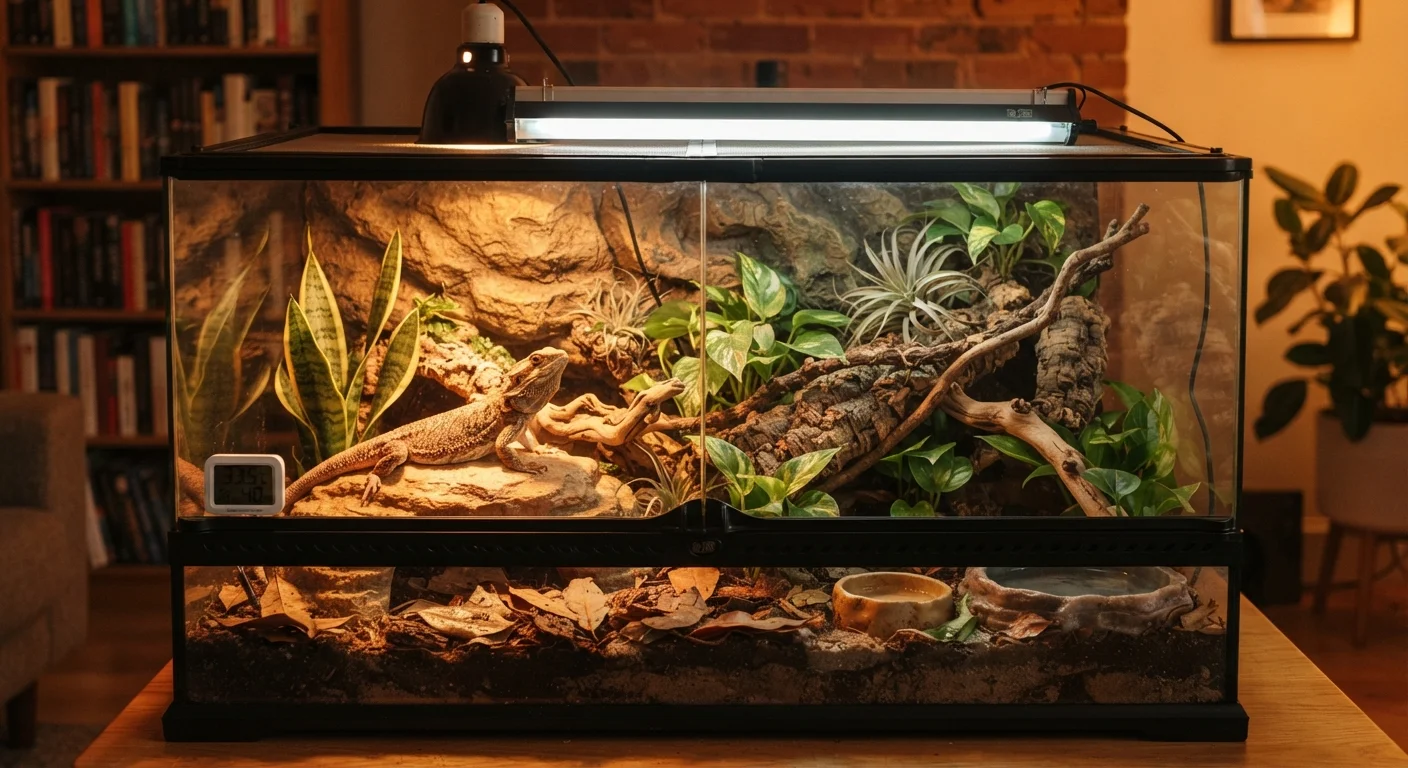
Key Takeaways
- The enclosure, heating, and lighting must be fully running and stable before your reptile arrives - not after.
- Most reptiles require UVB lighting to metabolize calcium; skipping it causes serious, preventable illness.
- Humidity and temperature gradients are species-specific - research your exact animal's needs before buying equipment.
- Finding a reptile-experienced veterinarian before day one is just as important as any piece of hardware.
- Reptile care involves specialized, ongoing costs - honest preparation prevents abandonment and rehoming.
Summary
22 items · 1-3 hours (spread across several days recommended)
Why Preparation Comes Before Purchase
Reptiles are among the most misunderstood pets in American homes. Their needs are highly specific, often invisible to the untrained eye, and almost impossible to improvise after the animal is already stressed in a travel container. Unlike a dog or cat, a reptile cannot adapt to a suboptimal environment and wait for you to catch up - temperature and lighting failures cause harm within hours or days.
If you're exploring ownership for the first time, read our honest overview of reptile ownership before purchasing any equipment. Once you're committed, work through every item below before the animal leaves the store or breeder. Set up and run your enclosure for at least 48-72 hours ahead of arrival to catch any equipment failures while you still have time to fix them.
Research and Planning
Enclosure Setup
Heating and Temperature Control
Lighting and UVB
Humidity and Water
Food and Supplementation
Equipment and Tools You'll Need
Below are the core tools involved in a proper reptile setup. Note that exact specifications - wattage, UVB index, humidity range - vary considerably by species. The resources linked throughout this article and species-specific guides like our bearded dragon care overview will help you match equipment to your animal's actual requirements.
Appropriately Sized Enclosure
Houses the reptile safely with space for temperature gradients, hides, and natural behavior.
Thermostat
Regulates heat sources to prevent dangerous temperature fluctuations and burns.
Digital Thermometer with Probe
Accurately measures temperature at basking and cool-side zones where the animal actually rests.
Digital Hygrometer
Monitors humidity levels inside the enclosure in real time.
UVB Lamp and Fixture
Provides the ultraviolet-B radiation most reptiles need to synthesize vitamin D3 and absorb calcium.
Basking Lamp or Ceramic Heat Emitter
Creates the elevated basking temperature your reptile needs to regulate body heat.
Programmable Timer
Automates the light/dark cycle to provide a consistent, species-appropriate photoperiod.
Calcium and Vitamin D3 Supplements
Corrects nutritional gaps in captive diets and supports bone health and metabolic function.
Don't Buy Equipment Based on Generic Guides
Reptile requirements vary dramatically between species - a humidity level ideal for a ball python can be harmful to a bearded dragon, and vice versa. Always source temperature, humidity, and UVB specifications from resources specific to your exact animal. When in doubt, ask a reptile-experienced veterinarian rather than relying on pet store staff alone.
Understanding Lighting: The Step Most New Owners Miss
Heat lamps are intuitive - most new reptile owners budget for them. UVB lighting is less obvious but equally critical for the majority of species kept as pets. Without adequate UVB exposure, many reptiles cannot synthesize vitamin D3, which means they cannot absorb dietary calcium properly. The result is metabolic bone disease, a painful and often irreversible condition.
Our guide to UVB lighting for reptiles explains how different bulb types work, how to position them correctly, and why the fixture distance from the animal matters as much as the bulb's UVI rating. Verify your bulb type, brand output, and replacement schedule before your reptile arrives - not after symptoms appear.
Skipping UVB Is a Medical Risk
Metabolic bone disease caused by insufficient UVB exposure and calcium deficiency is one of the most common - and most preventable - conditions seen in captive reptiles. Symptoms include soft or deformed bones, tremors, and inability to move normally. This condition often develops slowly and silently before owners notice anything is wrong. Ensure the correct UVB source is installed and functioning before your reptile arrives, and replace bulbs on schedule even if they still emit visible light.