

Key Takeaways
- UVB light triggers vitamin D3 synthesis in reptile skin - it cannot be fully replaced by diet alone for most species.
- Without adequate UVB, reptiles risk metabolic bone disease (MBD), a painful and potentially fatal calcium deficiency disorder.
- Glass and plastic filter out UVB rays, so enclosure design and bulb placement matter enormously.
- UVB bulbs degrade over time and should be replaced on a schedule even when they still appear to glow.
- UVB needs vary by species - always research the specific requirements for the reptile you keep.
UVB Lighting for Reptiles
UVB (ultraviolet B) lighting refers to a specific band of ultraviolet radiation - wavelengths between roughly 290 and 320 nanometers - that many reptiles need to produce vitamin D3 in their skin. Without vitamin D3, a reptile cannot absorb calcium from its diet, even if calcium is plentiful. Captive reptiles cannot get enough UVB from ordinary sunlight through glass or from standard household bulbs, so specialized reptile UVB lamps are required.
UVB is measured in microwatts per square centimeter (µW/cm²) or as a UV Index (UVI). The appropriate UVI range varies significantly by species - desert-dwellers like bearded dragons need much higher UVI than rainforest species like crested geckos.
Why UVB Is Essential, Not Optional
In the wild, reptiles that are active during the day spend hours exposed to natural sunlight. That sunlight contains UVB radiation, which penetrates their skin and kick-starts a biochemical chain reaction: UVB converts a precursor molecule into previtamin D3, which the body then converts into active vitamin D3. Vitamin D3 is the key that unlocks calcium absorption in the gut.
Calcium is not a minor nutrient for reptiles - it is fundamental to muscle function, nerve signaling, egg production, and bone integrity. When vitamin D3 is absent or insufficient, dietary calcium simply passes through unabsorbed. The body responds by pulling calcium from the bones, leading to the painful skeletal disorder known as metabolic bone disease (MBD).
Oral vitamin D3 supplements can partially compensate in some species, but research and veterinary consensus generally support that UVB synthesis through the skin is more efficient and better regulated by the reptile's own biology. For most commonly kept species, a quality UVB lamp is not a luxury - it is a core husbandry requirement. See our guide to reptile ownership for a broader picture of what captive reptile care actually involves.
Vitamin D3 Supplements Are Not a Full Substitute
Oral vitamin D3 supplementation is sometimes used alongside UVB lighting or in situations where UVB cannot be provided. However, over-supplementation of D3 can cause toxicity, while under-supplementation leaves the reptile deficient. UVB synthesis through the skin is self-regulating - the reptile's body stops producing D3 when levels are sufficient. Consult an exotic animal veterinarian before relying primarily on supplements rather than UVB lighting.
How UVB Bulbs Work - and Where They Fall Short
Reptile UVB lamps are available in several formats: compact coil bulbs, linear fluorescent tubes, and high-output mercury vapor bulbs. Each type emits UVB at different intensities and over different distances. The usable UVB zone - where the radiation is strong enough to be biologically meaningful - varies by bulb type and wattage.
Two critical physical facts govern UVB delivery in an enclosure:
- Glass and plastic filter UVB. Even a standard glass enclosure lid can block most UVB before it reaches the reptile. Wire mesh tops are strongly preferred by most herpetological care guides.
- Distance matters. UVB intensity drops off rapidly with distance. A bulb that provides adequate UVB at 10 inches may provide almost none at 18 inches. Always match bulb strength to enclosure height and confirm that your reptile can actually bask within the effective zone.
Equally important: UVB bulbs degrade invisibly. A bulb may still emit white visible light long after its UVB output has dropped to ineffective levels. This is a common and easily missed cause of chronic vitamin D3 deficiency. Follow a strict replacement schedule based on the bulb manufacturer's specifications - typically every 6 to 12 months.
~97%
UVB blocked by standard window glass
Glass absorbs nearly all UVB radiation in the 290-320 nm range, making window sunlight ineffective for reptile D3 synthesis.
6-12 months
Typical UVB bulb replacement interval
Most reptile UVB fluorescent lamps drop below effective UVB output well before the visible light element burns out.
UVI 3-6
Recommended basking zone UVI for bearded dragons
UVI levels in the basking zone are the standard measurement used by reptile care researchers to calibrate species-appropriate UVB exposure.
UVB Requirements Vary by Species
Not every reptile needs the same amount of UVB, and getting this wrong in either direction can cause problems. Reptile UVB needs are often categorized by the natural habitat and activity pattern of the species:
- High UVB (desert/open habitat species): Bearded dragons, uromastyx, and many tortoise species spend long periods in intense, direct sunlight. They need high UV Index levels - roughly UVI 3-6 or more in the basking zone.
- Moderate UVB (savanna or scrubland species): Blue-tongued skinks and many other diurnal lizards fall into an intermediate range.
- Low UVB (rainforest/crepuscular species): Crested geckos and some chameleon species are adapted to dappled, filtered light and require lower UVI levels.
- Nocturnal species: Leopard geckos and many snakes have minimal UVB requirements, though emerging research suggests low-level UVB may still be beneficial.
For species-specific guidance - including exact bulb recommendations and enclosure setup - consult your exotic animal veterinarian or a detailed care resource. Our bearded dragon care guide covers lighting and temperature gradients in practical detail for one of the most popular reptile species.
Use a UVI Meter to Verify Output
The only reliable way to confirm your reptile is receiving adequate UVB is to measure the UV Index in the basking zone with a dedicated UV meter. Visual inspection of the bulb tells you nothing about UVB output. A UV meter reading lets you confirm the correct UVI for your species and catch bulb degradation before it becomes a health problem.
Setting Up UVB Correctly in a Captive Enclosure
Providing UVB is not as simple as screwing in a bulb. The setup requires attention to placement, duration, and integration with the rest of the enclosure environment.
Photoperiod: Most diurnal reptiles should receive UVB light on a schedule that mimics a natural day-night cycle - typically 10 to 14 hours of light per day depending on the season. Consistent light cycles also support healthy hormonal rhythms and reduce stress.
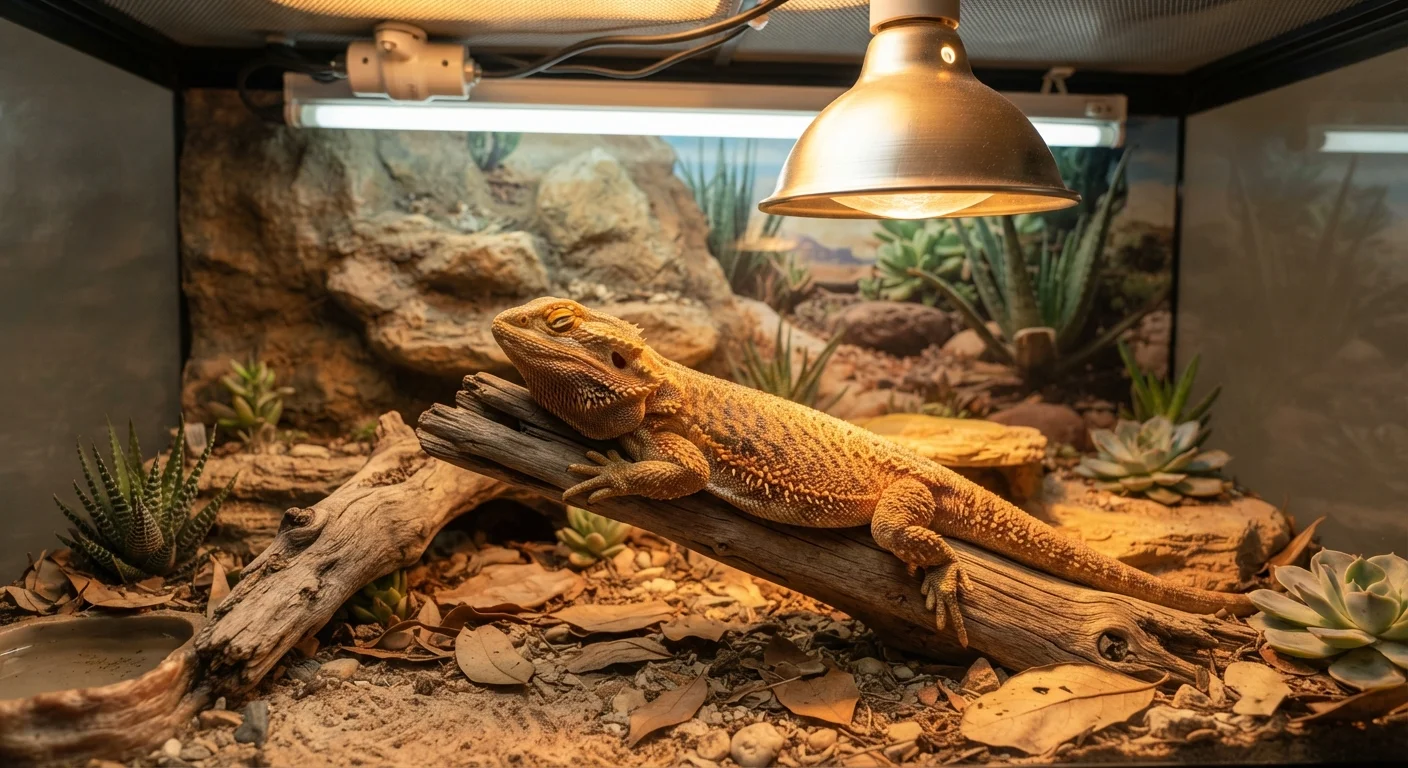
Basking zone alignment: The UVB source should overlap with or be positioned near the thermal basking spot. Reptiles thermoregulate behaviorally - they move toward heat to digest and toward UVB to synthesize D3. When these zones are separated, reptiles may not get adequate UVB exposure even if the lamp is present.
Shade access: Reptiles can self-regulate UVB exposure if given the option to move in and out of the UVB zone. Providing hides and shaded areas within the enclosure lets them do this naturally.
Before setting up an enclosure, review a preparation checklist to make sure every element - lighting, heating, substrate, and vet access - is in place. Our reptile preparation checklist is a useful starting point.
This article is for general educational purposes and does not replace guidance from a qualified exotic animal veterinarian. If you have concerns about your reptile's health or lighting setup, consult a veterinarian experienced with reptiles.