

Key Takeaways
- Matching water temperature, pH, and hardness requirements is the first step before considering temperament.
- Fin-nippers, aggressive feeders, and territorial species can destabilize even a carefully chosen community.
- Tank size and layout - including hiding spots and open swimming zones - directly affect fish stress levels.
- Introducing fish gradually and monitoring behavior in the first 72 hours prevents most compatibility conflicts.
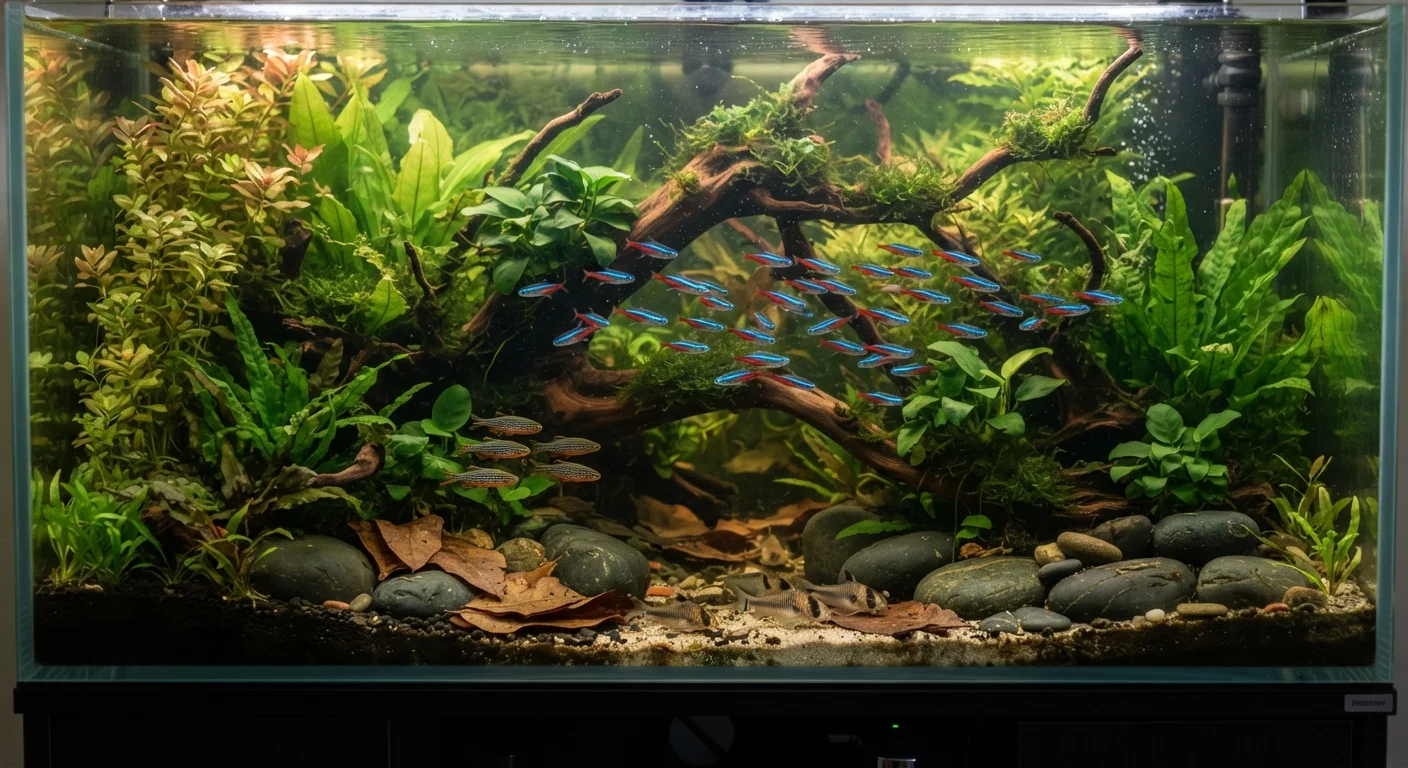
- Bottom-dwellers, mid-water schoolers, and surface swimmers can often coexist by occupying different tank zones.
Why Compatibility Is More Than Just "Peaceful" vs. "Aggressive"
Walk into any fish store and you'll see labels like "community safe" on tank dividers. While helpful as a starting point, that shorthand can mislead new aquarists into grouping species that have nothing in common biologically. True compatibility means aligning water chemistry needs, activity levels, body size, feeding behavior, and territorial instincts - all at once.
Before adding any new fish, consult the freshwater aquarium setup guide to confirm your tank is properly cycled and stable. Introducing fish into poor water conditions makes even compatible species stress-prone and more likely to act out.
"Community Safe" Labels Have Limits
Retailer labels reflect general temperament but not water chemistry compatibility or adult size. A species labeled community safe in one context may be a fin-nipper or outgrow its tank mates entirely. Always research each species independently using multiple reputable sources before purchasing.
Water Parameters Come First
Two fish might both carry "peaceful" labels, yet if one needs soft, acidic water at 78°F and the other thrives in hard, alkaline water at 72°F, they cannot share a tank long-term without one suffering. Water chemistry is non-negotiable. Group species by matching ranges for:
- Temperature: Most tropical fish do best between 74-80°F, but check each species individually.
- pH: Acidic (below 7.0) vs. alkaline (above 7.0) tolerances vary widely.
- Hardness (GH/KH): Soft-water species like discus and cardinal tetras will decline in hard water over time.
Understanding how dissolved waste interacts with these parameters is critical. The nitrogen cycle explained for fish owners covers why ammonia and nitrite spikes make even compatible tank mates aggressive or lethargic.
30%+
Aquarium fish deaths linked to poor water quality
Aquatic veterinary educators widely cite water parameter imbalance as a leading preventable cause of fish mortality in home aquariums.
3-5x
Stress increase in mismatched pH environments
Fish kept outside their optimal pH range show measurably elevated stress hormones and suppressed immune function, according to aquatic biology research.
Best Practices for Building a Compatible Community
Once water requirements are matched, focus on behavioral and physical compatibility. These proven approaches reduce conflict and create a stable, thriving tank.
Group fish by water layer - surface, mid-water, and bottom - to reduce territorial overlap.
Most aggression in community tanks stems from fish competing for the same swimming zone. By intentionally stocking each layer, you reduce direct competition for territory and food without requiring fish to change their natural behavior.
Avoid housing long-finned species with known fin-nippers.
Tiger barbs, serpae tetras, and some other species habitually nip at long, flowing fins, causing repeated stress injuries. Even if no fish dies outright, chronic fin damage leads to infection and immunosuppression.
Match adult body size carefully - avoid pairings where one species can swallow another.
A fish that looks small in a store tank may double or triple in size at maturity. Any fish small enough to fit in a tank mate's mouth is a potential meal, regardless of how "peaceful" the larger species is labeled.
Introduce new fish gradually and observe for the first 72 hours.
Established fish defend territory against newcomers, especially in smaller tanks. Introducing too many fish at once, or adding fish without a monitoring period, can result in bullying that goes unnoticed until fish are already injured.
Provide adequate hiding spots, plants, and sight breaks throughout the tank.
Line-of-sight is a major driver of aggression in fish. When a subordinate fish cannot escape a dominant fish's view, stress becomes chronic. Dense planting and decorations allow fish to retreat and reduce confrontations.
Quick Wins You Can Act On Today
If you're setting up a new tank or troubleshooting an existing community, start with these immediately actionable steps. Small changes in layout and stocking order can dramatically reduce aggression and stress.
If fish deaths continue despite these adjustments, the problem may be water quality rather than compatibility. The guide on why your fish keep dying walks through the most common underlying culprits.
The Expert Perspective on Community Stocking
Experienced aquarists emphasize that a community tank is an ecosystem, not just a collection of fish. Each species fills a niche, and imbalances cascade quickly.
“A successful community aquarium isn't about picking fish you like the look of - it's about understanding the ecological niche each species occupies and building a system where those niches don't conflict.”
— Aquatic Veterinary Education Consensus, General principle reflected across aquatic husbandry literature and fishkeeping education programs
This philosophy applies to goldfish too - a species frequently misunderstood as universally compatible. In reality, goldfish have very specific needs that make them poor tank mates for tropical fish. The common myths about keeping goldfish article covers why their reputation as easy community fish is largely unfounded.
This article is for general informational purposes. Always consult aquatic veterinary or fish care specialists for specific health concerns related to your fish.