

Key Takeaways
- Compound interest accelerates growth in both directions - it builds savings and deepens debt simultaneously.
- High-interest debt, such as credit cards, compounds rapidly and can outpace typical savings account returns.
- Making only minimum payments on debt allows interest to compound largely unchecked.
- Starting to save early amplifies the benefit of compounding through time in the market.
- Understanding compounding frequency helps you compare financial products more accurately.
Compound Interest
Compound interest is interest calculated not just on your original principal balance, but also on the interest that has already accumulated. This means your balance - whether it's savings or debt - grows at an accelerating rate over time. In savings, this works in your favor. In debt, it works against you.
Compounding frequency matters significantly: interest compounded daily grows faster than interest compounded monthly or annually, even at the same stated annual rate (APR).
The Same Math, Two Very Different Outcomes
Compound interest follows one rule: interest earns interest. Whether it applies to a savings account or a credit card balance, the underlying arithmetic is identical. What changes is which direction the momentum flows - toward you or away from you.
Think of compounding as a snowball rolling downhill. If you own the snowball, it grows in your favor. If you owe the snowball, it grows against you. The longer it rolls, the harder it becomes to stop.
This is why understanding compounding isn't just an investing concept - it's foundational to managing everyday debt. For a deeper look at how compounding powers long-term wealth building, see our guide to compounding as an investing force.
22%
Average US credit card APR
The Federal Reserve has reported average credit card interest rates above 20% APR in recent years, reflecting how expensive revolving debt has become.
Daily
How often most credit card interest compounds
Most major US credit card issuers apply a daily periodic rate to the outstanding balance, causing interest to accumulate faster than monthly compounding.
10+ years
Payoff time on minimum payments alone
Financial education sources consistently show that minimum payments on a mid-size credit card balance at high APR can extend repayment well beyond a decade.
How Compounding Works Against You in Debt
Credit card debt is one of the clearest examples of compounding working against consumers. Most cards compound interest daily - meaning your balance grows slightly every single day you carry a balance. By the time your monthly statement arrives, you're being charged interest on interest from earlier in the billing cycle.
Consider a $3,000 credit card balance at a 22% APR. Making only the minimum payment each month means it could take well over a decade to pay off - and the total interest paid can exceed the original balance. That outcome is driven almost entirely by compounding.
The minimum payment trap is especially important to recognize: minimum payments are often structured to cover little beyond the interest charge itself, which means the principal balance barely shrinks and the compounding cycle continues largely uninterrupted.
Pay More Than the Minimum When Possible
Even small additional payments above the minimum reduce your principal faster, which directly slows the compounding cycle on your debt. If you can add even $25-$50 extra per month on a high-interest balance, you interrupt the compounding momentum and reduce the total interest paid over the life of the debt. Every dollar of principal eliminated is a dollar that can no longer generate compounding interest charges against you.
If you're evaluating how to tackle multiple balances, the Debt Avalanche vs. Debt Snowball comparison can help you choose a structured payoff approach.
How Compounding Works For You in Savings
On the savings side, compound interest is an ally - but it rewards patience. When interest earned on a savings account or investment is left in place, it becomes part of the principal. Future interest is then calculated on that larger amount, and the process repeats.
The critical ingredient here is time. Someone who begins saving $200 per month at age 25 will typically end up with a significantly larger balance by retirement than someone who starts at 35 with the same monthly contribution, because each additional year adds another full cycle of compounding.
It's important to note that savings account APYs in the current environment vary widely. Compounding helps, but the rate still matters - higher-yield accounts amplify the compounding benefit. Always compare APY (Annual Percentage Yield), not just the stated rate, since APY reflects the actual effect of compounding frequency.
Balancing Debt Repayment and Savings Goals
One of the most common financial dilemmas is deciding whether to prioritize paying off debt or building savings. The compound interest dynamic makes this decision more nuanced than it first appears.
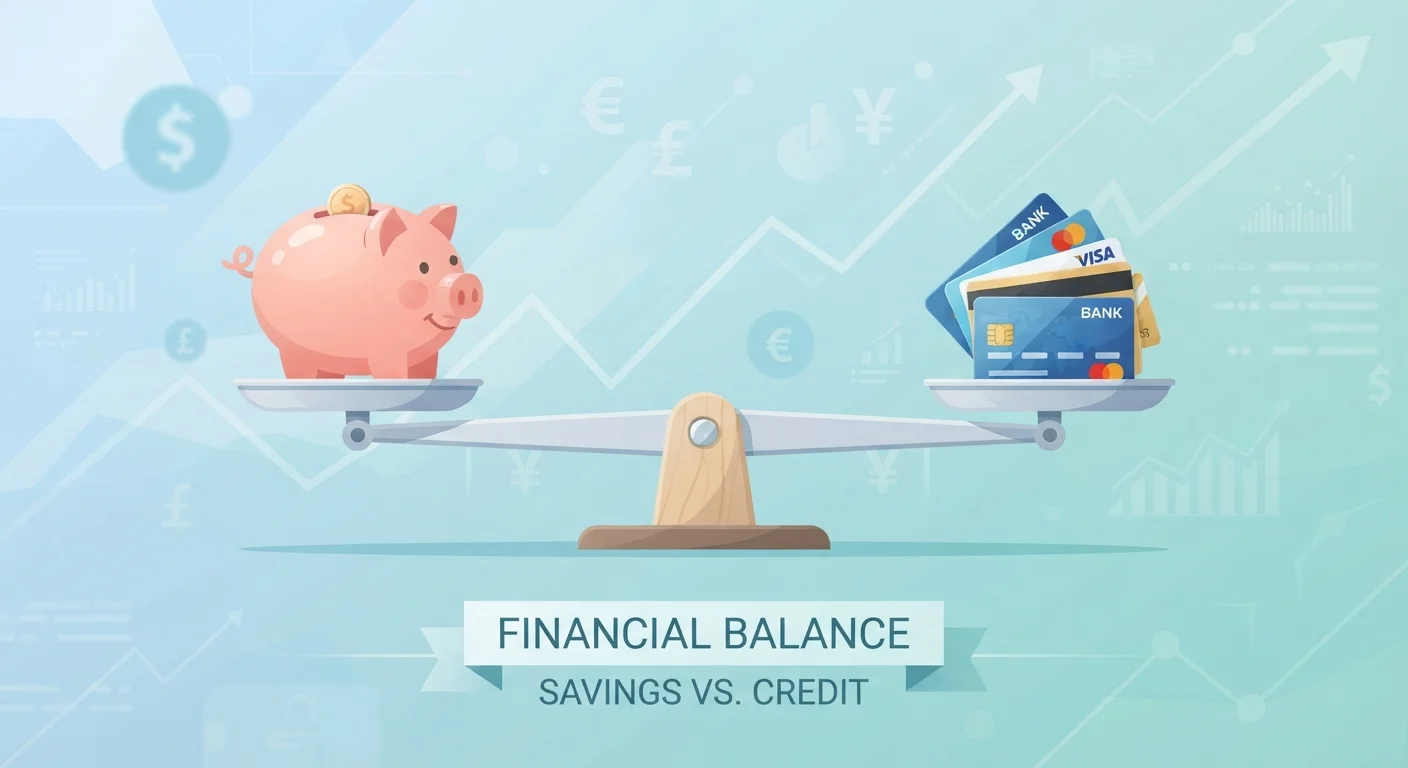
When high-interest debt - such as credit cards charging 18-25% APR - is left unpaid, the compounding cost of that debt will typically outpace the compounding gain of a savings account earning 4-5% APY. In that scenario, aggressively reducing the debt delivers a better mathematical outcome than growing savings at a lower rate.
However, maintaining at least a small emergency fund alongside debt repayment is widely recommended. Without any savings buffer, an unexpected expense may force new borrowing - restarting the compounding cycle on debt. This balance is the core tension explored in why saving and paying off debt at the same time isn't contradictory.
For a broader framework on structuring your finances when debt is already present, see building a personal savings plan when debt is in the picture. And for a complete overview of how savings and debt interact, the Managing Saving and Debt from the Ground Up guide is a useful starting point.
This article is for general informational and educational purposes only and does not constitute personalized financial advice. Consult a licensed financial professional before making decisions about your specific financial situation.