

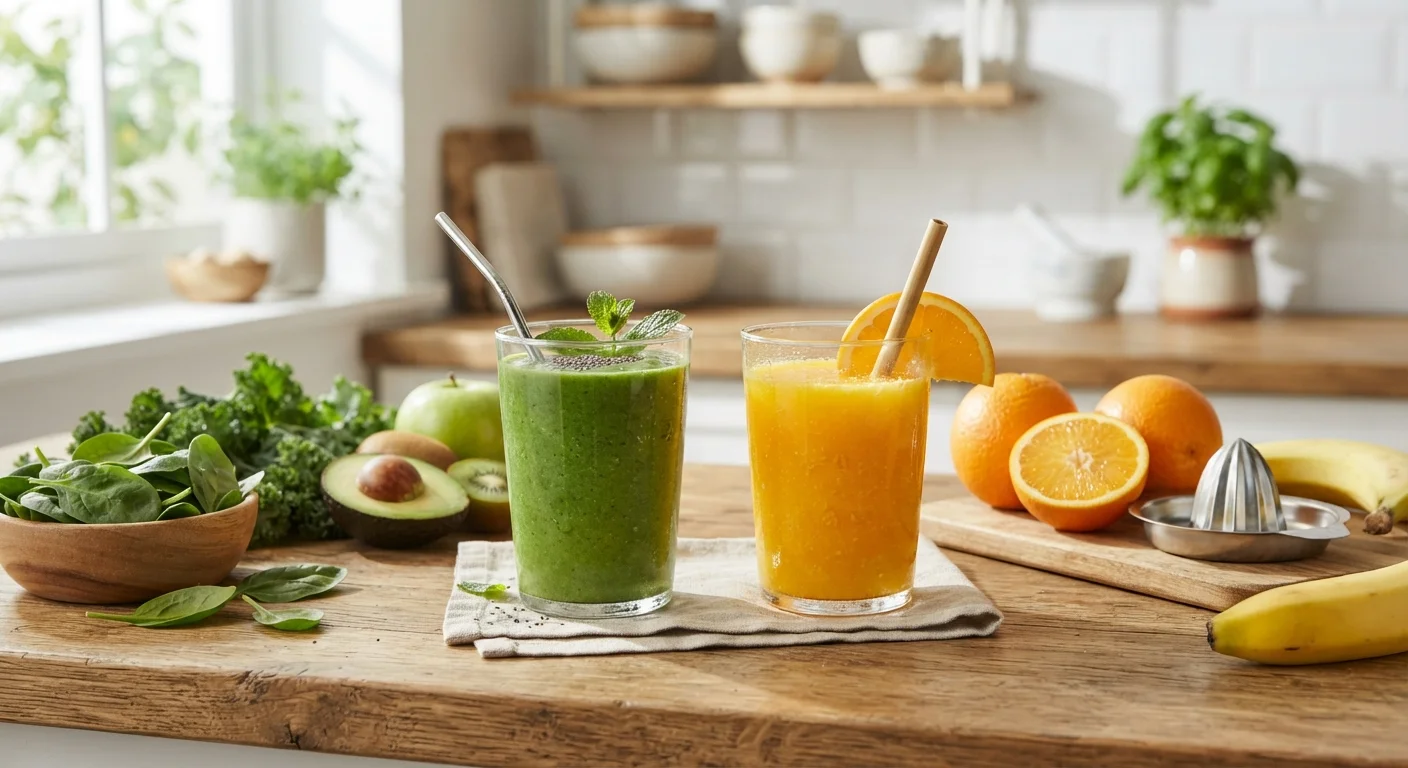
Key Takeaways
- Smoothies retain all of a fruit or vegetable's fiber; juicing removes most of it.
- Juices concentrate natural sugars, which can raise blood sugar faster than whole fruit or smoothies.
- Both methods preserve most vitamins, though heat-sensitive nutrients can degrade with prolonged exposure to air.
- Neither drink replaces eating whole fruits and vegetables, but smoothies come closer nutritionally.
- The 'best' choice depends on your health goals, not a universal rule.
Our Verdict
Smoothies and juices each have legitimate uses, but they work differently in the body. Smoothies preserve fiber, slow sugar absorption, and deliver a more complete nutritional profile. Juices remove fiber and concentrate sugars, making them less ideal as a daily staple - though they can still deliver vitamins efficiently in moderate amounts.
| Best for | Recommended |
|---|---|
| Those prioritizing fiber intake and steady energy levels | Smoothies |
| Those seeking a quick, easily digestible source of micronutrients | Juices |
| People managing blood sugar or following a higher-fiber diet | Smoothies |
| Short-term recovery or situations where chewing or digestion is difficult | Juices |
What Blending and Juicing Actually Do to Produce
When you blend whole fruits or vegetables into a smoothie, the blender breaks down cell walls mechanically - but every part of the ingredient stays in the glass. The pulp, skin, seeds (where appropriate), and liquid all remain. Juicing works differently: a juicer or cold press separates the liquid from the solid plant material, discarding the pulp. That physical difference is the foundation of every nutritional distinction between the two drinks.
Understanding this gap is similar to understanding what happens when grains are refined - processing always removes something, and the question is whether what remains still meets your nutritional needs.
Fiber: Kept vs. Removed
Dietary fiber is one of the clearest points of separation between smoothies and juices. Blending retains all of the fiber found in whole produce - both soluble fiber (which dissolves in water and helps slow digestion) and insoluble fiber (which adds bulk and supports digestive regularity). A smoothie made from a cup of strawberries and a banana contains essentially the same fiber as eating those fruits whole.
Juicing strips out most of this fiber along with the pulp. A standard glass of fresh-pressed apple juice, for example, contains a fraction of the fiber in a whole apple. This matters beyond digestion: fiber slows how quickly glucose enters the bloodstream. Without it, the natural sugars in juice are absorbed more rapidly, producing a sharper rise in blood sugar compared to the same fruit consumed whole or blended.
| Smoothies | Juices | |
|---|---|---|
| Fiber retained | All fiber preserved | Most fiber removed |
| Sugar absorption speed | Slower (fiber present) | Faster (no fiber) |
| Vitamin preservation | Good; no heat involved | Varies by juicer type |
| Produce volume per serving | Moderate | High (concentrated) |
| Satiety | Higher (fiber + bulk) | Lower |
| Digestive ease | Moderate | High (low fiber) |
| Addable ingredients | Easy (seeds, greens, fats) | Limited without blending |
This is related to the broader principle explored in our piece on whole foods versus processed foods - removing structural components of food tends to change how the body responds to it.
Vitamins and Minerals: What Survives Each Method
Both smoothies and juices can deliver meaningful amounts of vitamins and minerals, but several factors affect how much survives from produce to glass.
Make the Most of Either Drink
Drink smoothies or juices shortly after preparation to minimize oxidation-related nutrient loss. For smoothies, include a source of healthy fat - like a tablespoon of ground flaxseed or half an avocado - to boost absorption of fat-soluble vitamins. For juices, prioritize vegetable-forward recipes to keep sugar content lower.
Heat and oxidation are the main culprits of nutrient loss. Cold-press juicers minimize heat, preserving more heat-sensitive nutrients like vitamin C and certain B vitamins compared to centrifugal juicers, which generate friction. Smoothies bypass this concern entirely since no heat is involved. However, once either drink is made, exposure to air degrades nutrients - especially vitamin C - relatively quickly. Consuming either immediately after preparation is better than storing it for hours.
Fat-soluble vitamins (A, D, E, and K) are better absorbed in the presence of dietary fat. Adding a fat source - such as nut butter, seeds, or avocado - to a smoothie can meaningfully improve your body's ability to absorb these nutrients. Juice, consumed alone without fat, may deliver less usable fat-soluble nutrition unless paired with food.
Sugar Concentration: Why Juice Packs More Per Sip
To produce one 8-ounce glass of juice, you typically need several pieces of fruit or a large quantity of vegetables - far more than most people would eat in a single sitting. The liquid extracted is therefore a concentrated source of natural sugars. A glass of orange juice can contain the sugars from three or four oranges, with the fiber that would normally moderate their absorption removed.
~26g
Sugar in a typical 8 oz glass of apple juice
USDA food composition data shows that a single cup of unsweetened apple juice contains roughly 24-28 grams of naturally occurring sugar with minimal fiber.
~4.4g
Fiber in one medium apple
Per USDA data, a medium raw apple contains about 4-5 grams of dietary fiber - nearly all of which is lost during juicing.
Smoothies spread those sugars across a larger volume of blended material, and fiber slows their absorption. This makes smoothies a more moderate option for blood sugar management for most people, though portion size and ingredient choices still matter. Adding high-sugar fruit juice as a liquid base to a smoothie, for instance, can quickly increase its sugar load.
For more context on how different drinks compare nutritionally, see our overview of natural juice vs. juice from concentrate.
Practical Guidance: Choosing Between the Two
Neither smoothies nor juices are inherently superior - their value depends on context and what you're trying to accomplish. A few practical considerations:
- For everyday use: Smoothies more closely approximate the nutritional profile of whole produce and are generally a better daily habit.
- For micronutrient variety: Both can help you consume a wider range of produce than you might eat whole in a day.
- For digestive conditions: Some people find juice easier to tolerate when fiber aggravates symptoms - consult a healthcare professional for guidance specific to your situation.
- For added nutrition: Smoothies lend themselves to fortification with seeds, greens, protein, or healthy fats without major flavor disruption.
Neither drink replaces eating whole fruits and vegetables - a point also relevant when weighing drinks against nutrition from food versus supplements. Whole foods deliver fiber, phytonutrients, and food-matrix effects that no single extracted liquid can fully replicate.
This article is for informational purposes only and does not constitute medical or dietary advice. Consult a qualified healthcare professional for guidance specific to your health needs.