

Key Takeaways
- Brake pads are the friction material that physically contacts the rotor to slow your car.
- Rotors are the metal discs that pads clamp against; they wear down and can warp over time.
- Brake fluid is a hydraulic fluid that transfers pedal force to the calipers - it absorbs moisture and degrades.
- A spongy pedal, squealing noise, or pulling to one side are common signs your braking system needs attention.
- Brake inspections should follow your vehicle's maintenance schedule, typically every 12,000-15,000 miles or annually.
Hydraulic Disc Braking System
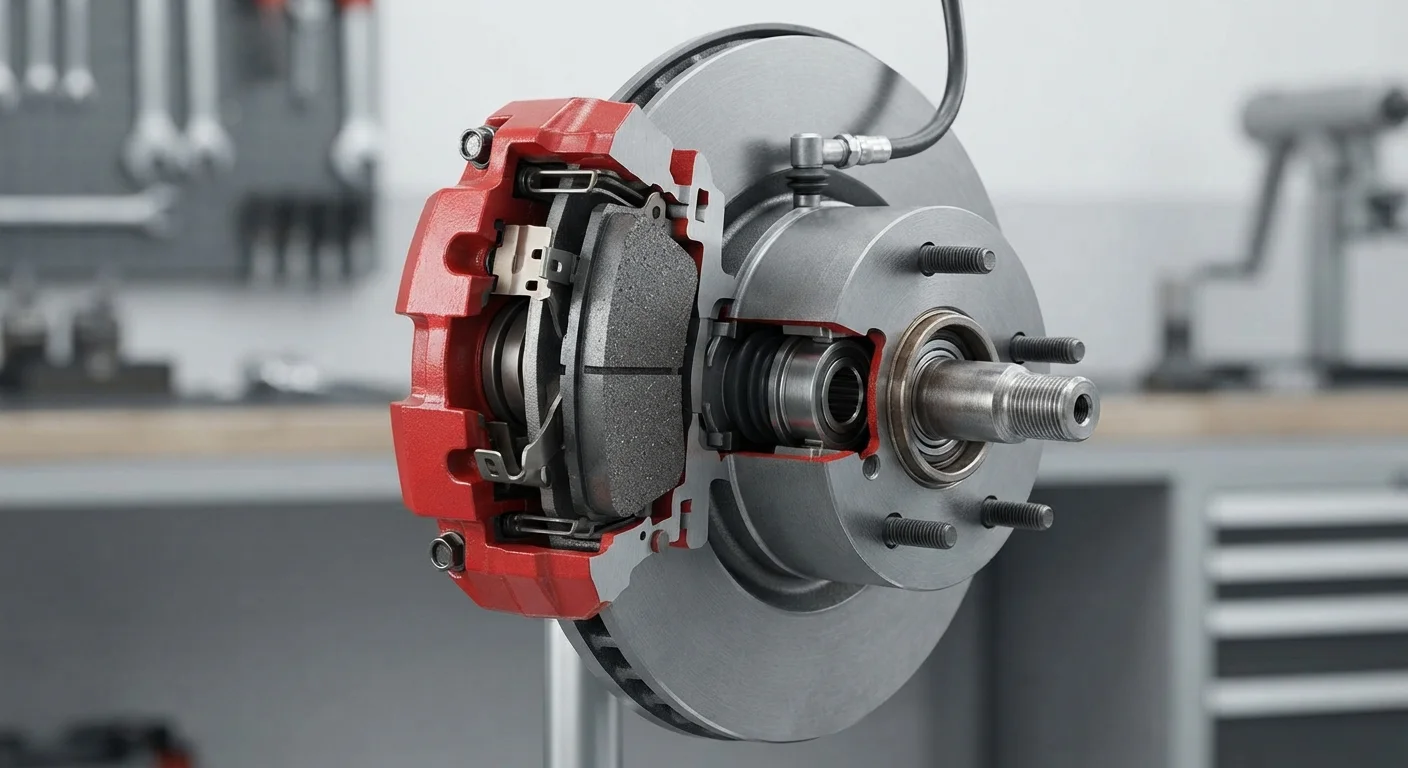
A hydraulic disc braking system converts the pressure you apply to the brake pedal into physical friction that slows your wheels. When you press the pedal, brake fluid transmits that force to calipers that squeeze brake pads against spinning metal discs called rotors. The resulting friction converts kinetic energy into heat, slowing the vehicle.
Most modern passenger vehicles use disc brakes on all four wheels; older and some economy vehicles may retain drum brakes on the rear axle, which operate on a similar hydraulic principle but with different internal geometry.
The Brake Pad: Where Friction Happens
Brake pads are the consumable workhorses of your stopping system. Each pad consists of a steel backing plate bonded to a layer of friction material - typically a composite of organic, semi-metallic, or ceramic compounds. When you press the brake pedal, the caliper squeezes the pad against the spinning rotor, and that contact converts the vehicle's forward momentum into heat.
Because pads wear with every stop, they have a finite lifespan. Most manufacturers build in a thin metal wear indicator that produces an audible squeal when the friction material drops below a safe threshold. That sound is intentional - it's your signal to schedule an inspection before the pads wear completely through and begin damaging the rotor.
Check Pads at Every Tire Rotation
Many technicians can visually assess brake pad thickness while wheels are off for rotation - a convenient, no-cost check. Ask your mechanic to note remaining pad thickness in millimeters so you have a baseline to track wear over time. This simple habit lets you plan replacements before an emergency arises.
The type of driving you do matters. Frequent hard stops in city traffic wear pads faster than steady highway cruising. Inspecting pads at each tire rotation is a simple habit that keeps you ahead of wear.
Rotors: The Discs That Take the Heat
Brake rotors - the large metal discs visible behind your wheel spokes - absorb and dissipate the enormous heat generated during braking. A typical rotor is cast iron, though some performance-oriented vehicles use composite or slotted designs for improved heat management. The rotor's thickness matters: manufacturers specify a minimum safe thickness, and rotors worn below that limit flex under braking pressure, reducing stopping effectiveness.
Rotors can also develop surface irregularities over time. Repeated heating and cooling, combined with uneven pad contact, can create a condition sometimes called brake judder - a vibration you feel through the pedal. A mechanic can measure rotor thickness with a micrometer and assess whether resurfacing or full replacement is warranted.
25,000-65,000 mi
Typical brake pad lifespan range
Actual lifespan varies significantly with driving style, vehicle weight, and pad compound; city driving accelerates wear.
~2 years
Recommended brake fluid replacement interval
Many manufacturers and industry guidelines suggest replacing brake fluid every two years due to moisture absorption, regardless of mileage.
DOT 3-5.1
Common brake fluid boiling point ratings
Higher DOT ratings indicate greater heat resistance; moisture contamination can lower effective boiling points by 50°F or more.
Brake Fluid: The Hydraulic Link
Pressing the brake pedal doesn't directly push the pads - that force travels through a hydraulic circuit filled with brake fluid. The master cylinder converts your pedal input into pressurized fluid, which flows through brake lines to the calipers at each wheel. This hydraulic multiplication is why relatively modest pedal effort can generate thousands of pounds of clamping force on the rotor.
Brake fluid is classified by its boiling point (DOT ratings such as DOT 3, DOT 4, and DOT 5.1 indicate progressively higher heat tolerance). The critical issue is that most brake fluids are hygroscopic - they slowly absorb water vapor from the air through microscopic permeation in the brake lines. Moisture lowers the fluid's boiling point, and under sustained hard braking, degraded fluid can partially vaporize inside the lines. Gas is compressible where liquid isn't, producing the disconcerting sensation of a spongy or sinking pedal. For a broader look at all the fluids your car depends on, see our guide to routine fluid checks.
Recognizing Warning Signs Early
The braking system communicates wear and problems through several distinct signals. Understanding them helps you respond appropriately rather than guessing.
- High-pitched squealing: Wear indicators contacting the rotor. Schedule an inspection soon.
- Grinding or metal-on-metal sound: Pad material is gone. Requires immediate attention from a qualified mechanic to prevent rotor damage.
- Vibration through the pedal: Often indicates rotor surface irregularities or warping.
- Pulling to one side under braking: Can indicate uneven pad wear or a sticking caliper.
- Spongy or low pedal: Suggests air in the brake lines or degraded fluid - a safety concern requiring professional diagnosis.
Your dashboard can also flag system issues. Dashboard warning lights explained covers what a brake warning light actually means and when it demands immediate action. And because braking performance is only one factor in how quickly your vehicle stops, our article on stopping distances puts the full picture in context.
Rear Drum Brakes: A Quick Note
Some vehicles, particularly older models and certain economy cars, use drum brakes on the rear axle instead of discs. Drum brakes enclose the friction components inside a metal drum and operate on the same hydraulic principle, but they run hotter and are harder to visually inspect. If your vehicle has rear drums, ask your mechanic to include them in any brake inspection - their wear indicators and service intervals differ from disc brakes.
Keeping Your Braking System in Good Shape
Routine maintenance is the most reliable way to keep your brakes performing as designed. Most manufacturers recommend a brake inspection at every oil change or at least annually, with pad and rotor replacement guided by wear measurements rather than arbitrary mileage. Brake fluid should be tested for moisture content or replaced on a schedule - consult your owner's manual for the interval specific to your vehicle.
Some maintenance tasks, like visually inspecting pad thickness through the wheel spokes, are straightforward for observant owners. However, any hands-on brake work - pad replacement, caliper servicing, or hydraulic bleeding - should be performed by a qualified mechanic. Errors in brake system assembly can have serious safety consequences, and this is not an area to approach without proper training and tools.
For a full picture of scheduled vehicle care, including when brakes typically appear on the maintenance calendar, see your car's maintenance schedule explained. Pairing good brake habits with proper tire maintenance gives your vehicle the best possible foundation for safe, controlled stopping.